 MElkhateeb
➡️ Introduction
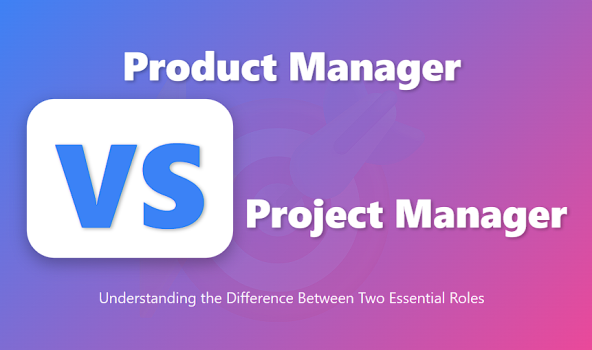
The titles Project Manager (PM) and Product Manager (PdM) sound similar — and they do share a few overlaps — but their focus, responsibilities, and success metrics are fundamentally different.
Top 5 Project Management Software
In simple terms:
- A Product Manager owns the “what” and “why” — defining the vision, strategy, and market fit of a product.
- A Project Manager owns the “how” and “when” — ensuring that the product or initiative is delivered successfully on time and within budget.
Understanding the difference between these roles is essential for organizations that want both innovation and execution excellence.
✅ Overview of Each Role
☑️ Product Manager
A Product Manager focuses on the product’s vision, strategy, and lifecycle. They act as the voice of the customer, shaping what should be built to deliver maximum market value.
They answer questions like:
- Who is the customer?
- What problem are we solving?
- What features deliver the most impact?
☑️ Project Manager
A Project Manager, on the other hand, focuses on planning, coordination, and execution. They ensure that the product vision becomes a reality through structured processes, timelines, and risk management.
They answer questions like:
- What needs to be done?
- When will it be completed?
- How will we deliver it successfully?
✅ Key Differences Between Product Managers and Project Managers
How focus, success metrics, and responsibilities differ between the two roles.
| Aspect | Product Manager | Project Manager |
|---|---|---|
| Primary Focus | Defines the product vision, strategy, and roadmap. | Delivers the project plan on time, within budget, and in scope. |
| Goal | Maximize product value and user satisfaction. | Ensure efficient execution and successful delivery. |
| Core Question | “What should we build, and why?” | “How will we build it, and when?” |
| Success Metric | Customer satisfaction, adoption rate, ROI, NPS. | Timeliness, budget control, scope compliance, quality. |
| Typical Tools | Miro, Productboard, Jira, Aha!, Figma. | Monday.com, Asana, ClickUp, MS Project. |
| Collaboration | Works with stakeholders, customers, and development teams. | Coordinates team members, vendors, and sponsors. |
| Time Horizon | Long-term product vision and continuous improvement. | Short- to medium-term delivery cycles tied to specific outcomes. |
| Reporting | Reports to product leadership or business executives. | Reports to PMO, sponsor, or operations leadership. |
✅ How the Two Roles Work Together
While their focus areas differ, both roles complement each other perfectly:
- The Product Manager defines the vision and direction.
- The Project Manager defines the execution plan to bring that vision to life.
In high-performing organizations, these two collaborate constantly — product sets the “why and what,” and project ensures the “how and when.”
This alignment prevents miscommunication, keeps stakeholders engaged, and drives consistent results.
✅ Common Misconceptions
❌ They’re the same role.
➡️ In reality, the Product Manager defines strategy; the Project Manager ensures delivery.
❌ One is more important.
➡️ Both are equally essential — without strategy, projects lack purpose; without execution, products never reach the market.
❌ They compete for authority.
➡️ The best organizations promote partnership, not hierarchy, between these roles.
✅ Final Thoughts
Both Product Managers and Project Managers are leaders — but in different dimensions.
The product manager ensures the team builds the right thing, while the project manager ensures it’s built the right way.
When they work together, they turn vision into results — combining innovation, discipline, and measurable success.
A product manager builds the “why.”
A project manager delivers the “how.”
Together, they create value that lasts.