 MElkhateeb
➡️ Introduction
In today’s fast-paced business environment, most project managers juggle not one, but several projects at the same time.
From overlapping deadlines to competing priorities and limited resources — managing multiple projects simultaneously can feel like spinning several plates in the air.
Top 5 Project Management Software
However, with the right tools, structure, and mindset, it’s entirely possible to keep every project on track without burnout or confusion.
This article explains how to manage multiple projects effectively, common pitfalls to avoid, and practical methods to stay in control of your workload.
✅ The Challenges of Managing Multiple Projects
Handling several projects means managing:
✔️ Conflicting timelines and priorities.
✔️ Shared resources and dependencies.
✔️ Information overload from multiple stakeholders.
✔️ Frequent context switching that reduces focus.
The key is not just “working harder” — but working smarter through structure, visibility, and discipline.
✅ Strategies for Managing Multiple Projects
Key techniques project managers use to maintain control and balance across parallel projects.
| Strategy | How It Helps | Example Tool / Practice |
|---|---|---|
| Prioritize by Business Value | Ensures the most strategic projects get attention and resources first. | Weighted scoring matrix or portfolio management dashboard. |
| Centralize Planning | Gives visibility across all timelines and dependencies. | Gantt charts or unified calendars in Monday.com or ClickUp. |
| Standardize Workflows | Reduces chaos by applying the same templates and approval flows. | Standardized templates for kickoff, status, and closure reports. |
| Manage Resource Capacity | Prevents over-allocation and burnout across shared teams. | Resource utilization charts or workload heatmaps. |
| Use a Single Reporting Structure | Provides leadership with one view of all projects and progress. | Weekly consolidated dashboard or PMO report. |
✅ Key Tips for Managing Multiple Projects
☑️ 1. Align All Projects to Organizational Goals
Ensure every project supports a clear business objective. If not, it might not deserve your time or resources.
☑️ 2. Use Project Prioritization Matrices
Rank projects based on impact, urgency, risk, and resource requirements to allocate effort effectively.
☑️ 3. Build a Unified Schedule
Use a master timeline showing dependencies and milestones across all projects — this prevents scheduling conflicts.
☑️ 4. Review Workload Weekly
Track resource capacity, meeting load, and bottlenecks regularly. Adjust priorities when demands shift.
☑️ 5. Communicate Transparently
Keep sponsors and team members informed through consistent reporting channels — no surprises.
☑️ 6. Automate Where Possible
Automate status reporting, task reminders, and approvals using tools like Miro, Monday.com, or ClickUp to save time.
✅ Common Mistakes to Avoid
❌ Starting too many projects without proper prioritization.
❌ Ignoring early warning signs of resource overload.
❌ Micromanaging every task instead of delegating ownership.
❌ Neglecting to communicate cross-project risks and dependencies.
✅ Recommended Tools for Multi-Project Management
- Monday.com – for portfolio tracking and team workload visualization.
- ClickUp – for unified task management and time tracking.
- Miro – for collaborative project roadmaps and retrospectives.
- Smartsheet – for high-level dashboards and reporting.
✅ Final Thoughts
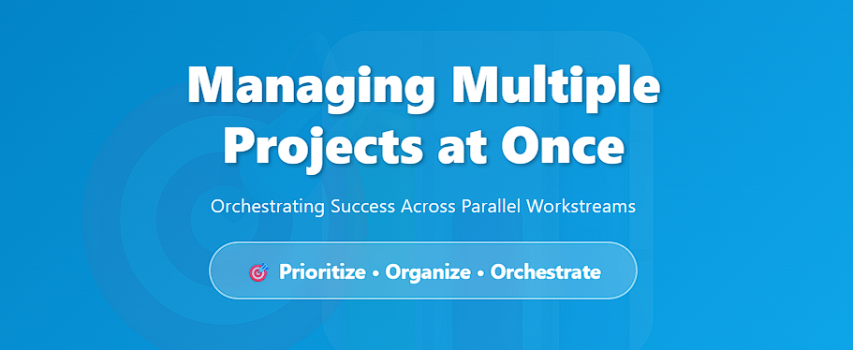
Managing multiple projects isn’t about doing more — it’s about creating a system where each project moves forward in harmony with the others.
When priorities are clear, workflows standardized, and communication consistent, project managers can lead confidently even across complex portfolios.
The secret isn’t multitasking — it’s strategic orchestration.