 MElkhateeb
➡️ Introduction
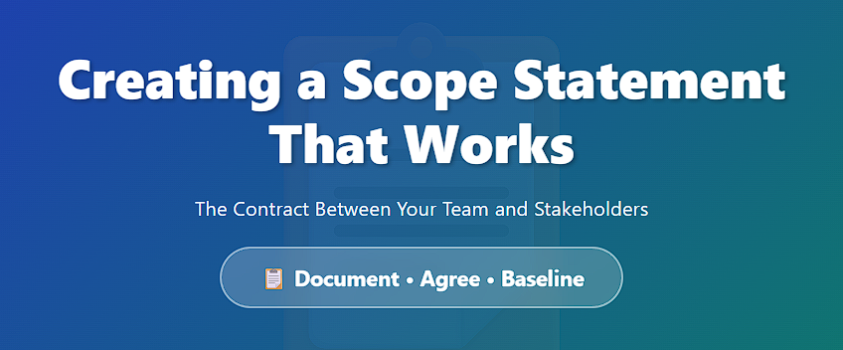
Every successful project begins with one clear, documented agreement: the Scope Statement.
Top 5 Project Management Software
A well-written scope statement is more than a formality — it’s a contract between the project team and stakeholders that defines what will be delivered, how, and within what limits.
Without it, misunderstandings multiply, priorities shift, and the project risks drifting off course.
This article explains what a scope statement is, how to create one that works, and provides an example structure you can use immediately in your next project.
✅ What Is a Scope Statement?
A scope statement describes the project’s deliverables, objectives, boundaries, and success criteria.
It gives the project team direction and provides a reference point for sponsors and stakeholders when evaluating progress or approving changes.
A strong scope statement ensures everyone agrees on:
✔️ What the project will deliver.
✔️ What’s excluded.
✔️ The conditions under which work will be accepted.
✅ Why a Clear Scope Statement Matters
✔️ Prevents Scope Creep: Defines boundaries to stop unplanned additions.
✔️ Improves Communication: Sets shared expectations early.
✔️ Supports Planning: Guides scheduling, budgeting, and resourcing.
✔️ Creates Accountability: Provides a baseline for measuring performance.
✔️ Enhances Stakeholder Confidence: Shows that the project is well-defined and managed.
✅ Key Elements of a Scope Statement
Core sections that make your scope statement clear, measurable, and aligned with business goals.
| Element | Description | Example |
|---|---|---|
| Project Objectives | Specific, measurable goals defining project success. | Increase website traffic by 25% within six months. |
| Deliverables | Tangible products or services the project will produce. | Launch of a new marketing website with blog and analytics integration. |
| Inclusions & Exclusions | Clarifies what’s within the project scope — and what’s not. | Includes SEO setup; excludes ongoing social media management. |
| Assumptions | Conditions presumed true during planning. | All required content will be provided by the client before design begins. |
| Constraints | Budget, time, or resource limits affecting project execution. | Total project cost limited to $100,000, completion deadline in 16 weeks. |
| Acceptance Criteria | Defines how deliverables will be validated and approved. | Website must load in under 2 seconds and pass security audit before sign-off. |
✅ How to Create a Scope Statement That Works
☑️ 1. Engage Stakeholders Early
Interview key sponsors and end users to understand true needs and desired outcomes.
☑️ 2. Keep It Measurable and Specific
Replace vague terms like “improve efficiency” with quantifiable results such as “reduce processing time by 20%.”
☑️ 3. Include What’s Not in Scope
Document exclusions clearly — they prevent later disputes and keep focus on agreed deliverables.
☑️ 4. Define Success Criteria
Explain how success will be measured. Align this with KPIs or organizational goals.
☑️ 5. Get Written Approval
Ensure the sponsor and project manager both sign the document — establishing the scope baseline.
✅ Common Mistakes to Avoid
❌ Writing the scope statement after project kickoff.
❌ Leaving out assumptions or exclusions.
❌ Using non-specific language that can be interpreted differently.
❌ Failing to review or update the statement as changes occur.
✅ Example Scope Statement Summary
A concise summary of the key sections you’ll include in your scope statement.
| Section | Example Summary |
|---|---|
| Objective | Implement an employee self-service portal to reduce HR workload by 30%. |
| Deliverables | Portal design, development, testing, deployment, and user training. |
| Exclusions | Payroll integration and performance management modules. |
| Constraints | 4-month timeline, $80,000 budget, internal resources only. |
| Acceptance Criteria | Supports 500 concurrent users and passes all security policy checks before sign-off. |
✅ Final Thoughts
A scope statement that works doesn’t just describe what you’ll do — it protects your project from confusion, misalignment, and uncontrolled change.
When written clearly, reviewed by stakeholders, and approved formally, it becomes the north star of project execution.
Clarity isn’t optional — it’s the foundation of control. A precise scope statement keeps your project focused, realistic, and measurable.