 MElkhateeb
➡️ Introduction
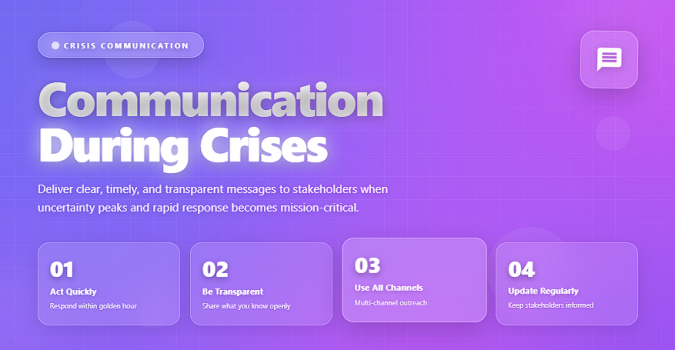
When a crisis hits a project — whether it’s a system failure, a supplier breakdown, a security breach, or a sudden market change — communication becomes the most critical tool a project manager has.
Poor communication during a crisis magnifies fear, confusion, and misalignment.
Strong communication, on the other hand, protects the team, stabilizes stakeholders, and helps the project recover faster with minimal damage.
Top 5 Project Management Software
Effective crisis communication ensures that:
✔️ the right people receive the right information
✔️ decisions are made quickly and confidently
✔️ rumors and panic are prevented
✔️ leadership maintains credibility
✔️ actions remain coordinated and consistent
This article explains how to communicate effectively during a crisis, what structures to use, and how great project managers maintain clarity when everything else feels uncertain.
✅ What Is Crisis Communication in Project Management?
Crisis communication refers to the structured, fast, and accurate flow of information during unexpected events that threaten the project’s objectives, timeline, cost, or reputation.
It includes:
- immediate notifications
- status updates
- escalation protocols
- coordination between teams
- communication with stakeholders
- transparent reporting
- post-crisis communication & learnings
✅ Why Crisis Communication Matters
Effective communication during crises ensures:
✔️ alignment — everyone knows what is happening
✔️ focus — people understand priorities
✔️ control — reduces panic and misinformation
✔️ speed — decisions and actions happen faster
✔️ credibility — stakeholders trust the project team
Without a structured communication plan, crises escalate faster and cost far more.
✅ Core Elements of Crisis Communication
What every crisis communication plan must include.
| Element | Description | Why It Matters |
|---|---|---|
| Rapid Notification | Immediate alerts sent when the crisis begins. | Prevents confusion and delays. |
| Clear Leadership Roles | Defines who communicates, who decides, and who executes. | Eliminates leadership conflicts during chaos. |
| Consistent Messaging | Unified communication across teams and channels. | Prevents mixed signals and stakeholder panic. |
| Escalation Path | Defined process for escalating severe issues. | Ensures faster decision-making. |
| Transparent Updates | Regular reports on progress and status. | Builds trust and maintains control. |
✅ How to Communicate Effectively During a Crisis
✔️ 1. Communicate Early — Even Before You Have All the Answers
Silence during a crisis creates fear.
Always announce:
- what is known
- what is unknown
- what the team is doing
Early communication reduces anxiety and establishes control.
✔️ 2. Use a Single Source of Truth
Choose one main communication channel for crisis updates, such as:
✔️ Teams channel
✔️ WhatsApp group
✔️ Slack crisis room
✔️ Email distribution list
Scattered updates create misinformation.
✔️ 3. Define Roles and Responsibilities
A crisis team should include:
✔️ a Crisis Lead
✔️ technical experts
✔️ communications officer
✔️ decision-makers
✔️ customer/stakeholder representative
Everyone must know who speaks and who acts.
✔️ 4. Communicate Clearly and Frequently
Use short, structured updates:
- What happened
- Impact
- Current status
- Actions underway
- Next steps
- Decisions needed
Avoid emotional or speculative language.
✔️ 5. Keep Stakeholders Updated Without Overloading Them
Executives need concise reports.
Teams need operational details.
Customers need reassurance.
Tailor the message to each audience.
✔️ 6. Document Every Update
Record:
✔️ time of update
✔️ who delivered it
✔️ decisions made
✔️ actions taken
This supports transparency and post-crisis learning.
✔️ 7. Maintain Professional Calm
Your tone sets the emotional temperature of the team.
Stay calm, factual, and confident.
✔️ 8. Provide Closure After the Crisis Ends
Send a final message including:
✔️ root cause summary
✔️ final resolution
✔️ lessons learned
✔️ preventive actions
Stakeholders must know the crisis is fully resolved.
🛠️ Tools That Support Crisis Communication
✔️ Microsoft Teams – crisis channels + live updates
✔️ Slack – incident response workflows
✔️ Jira – technical incident tracking
✔️ Monday.com – crisis boards & action plans
✔️ Miro – real-time collaboration during crises
✔️ Power BI – live dashboards for crisis visibility
❌ Common Mistakes to Avoid
❌ delaying communication
❌ delivering conflicting messages
❌ exaggerating or minimizing the crisis
❌ ignoring stakeholder communication needs
❌ lack of documented communication trails
⭐ Best Practices
✔️ prepare crisis templates in advance
✔️ train the team on escalation procedures
✔️ maintain calm, fact-based communication
✔️ always communicate action, not excuses
✔️ reinforce accountability and clarity
✔️ review crisis communication performance after each incident
⭐ Final Thoughts
During crises, communication becomes your greatest leadership tool.
Clear, fast, consistent communication helps teams stay coordinated, reduces uncertainty, maintains trust, and accelerates recovery.
Good communication manages a crisis.
Great communication prevents a crisis from becoming a disaster.