 MElkhateeb
➡️ Introduction
Projects rarely unfold exactly as planned. Costs fluctuate, schedules shift, and resource usage changes based on real-world challenges.
To understand why performance deviates from the plan, project managers rely on a critical tool: Variance Analysis.
Top 5 Project Management Software
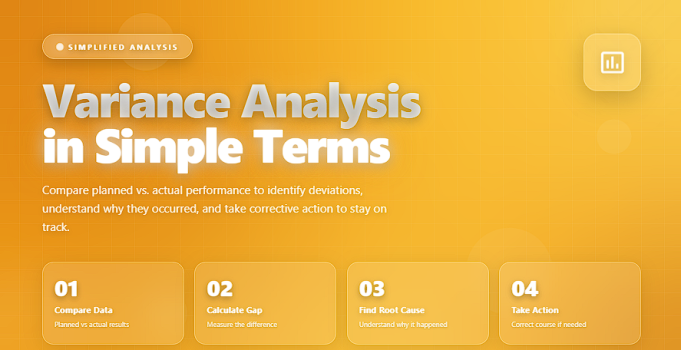
Variance analysis helps you compare planned performance vs actual performance so you can identify problems early, correct course quickly, and keep the project aligned with its objectives.
This article explains variance analysis in simple, practical terms — with examples, best practices, and a responsive table ready for all devices.
✅ What Is Variance Analysis?
Variance analysis is the process of measuring the difference between what was planned and what actually happened, then analyzing the reason behind that difference.
In project management, we typically analyze variances in:
✔️ Schedule
✔️ Cost
✔️ Scope
✔️ Resources
✔️ Quality
Variance analysis answers three essential questions:
👉 Are we on track?
👉 If not, why?
👉 What must we adjust to stay on course?
✅ Types of Variance in Projects
The most important variance categories you should track.
| Variance Type | Meaning | Why It Matters |
|---|---|---|
| Schedule Variance (SV) | Difference between planned progress vs actual progress. | Shows if the project is ahead or behind schedule. |
| Cost Variance (CV) | Difference between budgeted cost vs actual cost. | Reveals overspending or cost savings. |
| Resource Variance | Difference between planned vs actual resource usage. | Helps optimize workload and staffing. |
| Quality Variance | Difference between expected vs delivered quality. | Prevents rework and customer dissatisfaction. |
| Scope Variance | Difference between planned scope vs actual delivered scope. | Helps detect scope creep early. |
✅ How to Perform Variance Analysis (Step-by-Step)
✔️ 1. Compare Planned vs Actual Data
Start by gathering baseline data (schedule, cost, scope) and comparing it to actual results.
Example:
- Planned task duration: 10 days
- Actual duration: 14 days
- Schedule variance = +4 days (behind schedule)
✔️ 2. Identify the Cause Behind the Variance
Common causes include:
✔️ underestimated effort
✔️ delays from vendors
✔️ unexpected technical issues
✔️ scope increases
✔️ inaccurate assumptions
Focus on the root cause, not the symptom.
✔️ 3. Classify the Variance (Favorable vs Unfavorable)
- Favorable variance: ahead of schedule or under budget
- Unfavorable variance: behind schedule or overspending
This helps prioritize actions.
✔️ 4. Assess the Impact on the Project
Ask questions like:
👉 Does this delay affect other tasks?
👉 Will this cost overrun impact the total budget?
👉 Does this variance change the critical path?
Not all variances require action — only impactful ones.
✔️ 5. Take Corrective or Preventive Action
Actions may include:
✔️ reallocating resources
✔️ adjusting schedule buffers
✔️ revising cost estimates
✔️ increasing quality checks
✔️ unblocking approvals
The goal is always to realign the project with the plan.
✔️ 6. Update Forecasts
Variance analysis should inform:
- updated timelines
- revised budgets
- new resource plans
- updated project risks
Forecast updates prevent surprises later.
✅ Why Variance Analysis Matters
Variance analysis is critical because it helps you:
✔️ detect issues early
✔️ improve decision-making
✔️ keep stakeholders informed
✔️ predict future performance trends
✔️ strengthen control over the project
It transforms raw data into actionable insights.
❌ Common Variance Analysis Mistakes
❌ Ignoring small variances until they grow
❌ Misinterpreting symptoms as root causes
❌ Comparing inconsistent data
❌ Using outdated baselines
❌ Focusing on data, not decisions
⭐ Best Practices
✔️ Perform variance reviews weekly
✔️ Use consistent metrics
✔️ Visualize data with charts and dashboards
✔️ Analyze trends, not just single deviations
✔️ Maintain an updated baseline for comparison
⭐ Final Thoughts
Variance analysis is a simple but powerful tool for maintaining control over a project. By comparing planned vs actual performance and analyzing the cause behind deviations, project managers can make informed decisions, protect timelines and budgets, and maintain stakeholder confidence.
Variance doesn’t mean failure —
it means opportunity for improvement and informed decision-making.