 MElkhateeb
➡️ Introduction
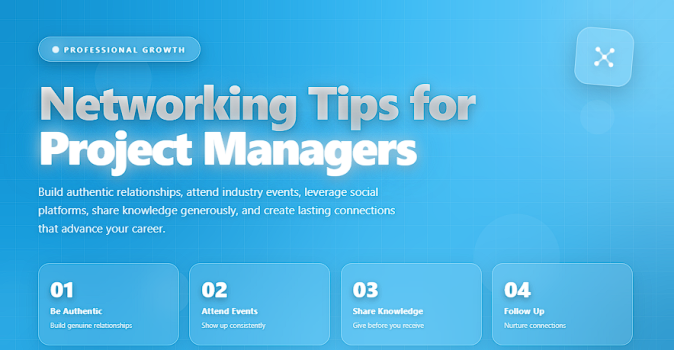
Project management is a relationship-driven profession. Whether you’re leading cross-functional teams, negotiating with vendors, collaborating with executives, or seeking mentorship, your network often determines your opportunities, influence, and ability to deliver successful projects.
Top 5 Project Management Software
Yet many project managers treat networking as an optional “extra.” In reality, strong networking supports almost every part of a PM’s work — from solving problems faster to securing support for decisions to growing professionally.
This guide explains why networking matters, how to build genuine connections, and practical strategies to grow your influence inside and outside your organization.
✅ Why Networking Matters for Project Managers
Networking isn’t just about meeting people — it’s about building trust, credibility, and access to knowledge.
Strong PM networks help with:
✔️ Faster problem-solving — someone already faced your issue
✔️ Better stakeholder engagement — people support those they know
✔️ Improved team collaboration — relationships reduce friction
✔️ Career development — promotions and opportunities often come via referrals
✔️ Stronger vendor and partner relationships — improves negotiation
✔️ Staying updated on industry trends — frameworks, tools, best practices
A well-connected PM rarely works alone — they navigate complex environments through relationships.
✅ Tip 1: Build Internal Relationships First
Before you build an external network, strengthen your internal one.
How to do it:
✔️ Schedule short introductions with team leads
✔️ Attend cross-department meetings
✔️ Volunteer to help with organizational initiatives
✔️ Be visible in leadership forums or communities of practice
Internal relationships increase cooperation, reduce resistance, and boost support for your project.
✅ Tip 2: Create Strong Connections With Stakeholders
Stakeholders remember PMs who are:
✔️ reliable
✔️ transparent
✔️ consistent
✔️ respectful
Practical actions:
- Share updates proactively
- Listen actively to concerns
- Show appreciation for contributions
- Build rapport before asking for support
Stakeholders trust you more when they feel seen, heard, and respected.
✅ Tip 3: Engage in Professional Communities
Join communities where PMs exchange challenges, templates, and frameworks.
Recommended places:
✔️ PMI local chapters
✔️ LinkedIn groups
✔️ Slack/Discord PM communities
✔️ Reddit r/projectmanagement
✔️ Online meetups and virtual summits
Communities help PMs learn faster and connect with mentors and peers globally.
✅ Tip 4: Attend Conferences and Workshops
In-person events provide high-value, high-trust networking opportunities.
Benefits:
✔️ Face-to-face conversations create lasting impressions
✔️ Exposure to new methods, tools, and certifications
✔️ Opportunities to connect with industry experts
✔️ Access to hiring managers and decision-makers
Even attending once a year builds long-term professional visibility.
✅ Tip 5: Maintain Your Network (Don’t Let It Go Cold)
Networking is NOT a one-time activity.
You must maintain the relationship.
Ways to keep connections alive:
✔️ Share useful resources (articles, books, templates)
✔️ Send quick check-in messages
✔️ Congratulate people on good news
✔️ Offer help without expecting a return
✔️ Stay active on professional platforms
Consistency builds trust.
✅ Tip 6: Use Social Media Wisely
Platforms like LinkedIn have become essential for modern PM careers.
What to do:
✔️ Post insights from your projects
✔️ Share lessons learned
✔️ Comment on industry topics
✔️ Connect with peers after meetings or events
✔️ Showcase certifications, templates, and frameworks
Your online presence becomes a digital portfolio of your expertise.
✅ Tip 7: Build a Personal Brand as a PM
Your brand is how people think of you professionally.
Start by being known for:
✔️ reliability
✔️ problem-solving
✔️ clarity in communication
✔️ leadership
✔️ integrity
✔️ PM domain expertise
A strong brand makes networking easier because people seek you.
✅ Tip 8: Give Before You Ask
The strongest relationships are built on reciprocity.
Offer value first.
Give by:
✔️ sharing templates
✔️ helping with a stakeholder issue
✔️ making an introduction
✔️ giving advice to a junior PM
✔️ answering questions in PM forums
People remember those who help them without expecting anything in return.
✅ Tip 9: Learn How to Start (and End) Conversations
Strong networking requires social confidence.
Conversation starters:
- “What brought you to this event?”
- “What projects are you working on now?”
- “How do you handle stakeholder resistance in your role?”
Ways to end gracefully:
- “It was great meeting you — may I add you on LinkedIn?”
- “Let’s continue this conversation later. I’d love to stay connected.”
Simple, natural conversation goes a long way.
✅ Tip 10: Follow Up Within 48 Hours
Following up locks the relationship in memory.
Send a message like:
“Great talking with you today. I enjoyed our discussion about project dashboards and would love to stay in touch.”
People appreciate professional follow-up — it shows respect and maturity.
⭐ Final Thoughts
Networking is one of the most underrated skills in project management.
It strengthens influence, accelerates career growth, improves stakeholder relationships, and makes complex projects significantly easier to manage.
The larger your network, the stronger your impact as a project manager.
Start with one conversation a week — consistency builds a professional network that lasts your entire career.