 MElkhateeb
➡️ Introduction
One of the biggest reasons projects fail is not poor execution — it’s misalignment.
Many teams build strong project plans, follow structured methodologies, and execute tasks perfectly, yet the organization still sees little value. Why? Because the project is not connected to the company’s strategic direction.
Top 5 Project Management Software
Strategic alignment ensures that every deliverable, milestone, and resource contributes to broader business goals.
For project managers, mastering this skill is essential for credibility, impact, and long-term career growth.
This article explains why alignment matters, how to achieve it, and provides a responsive comparison table to help you embed strategic thinking into your planning process.
✅ What Does Strategic Alignment Mean?
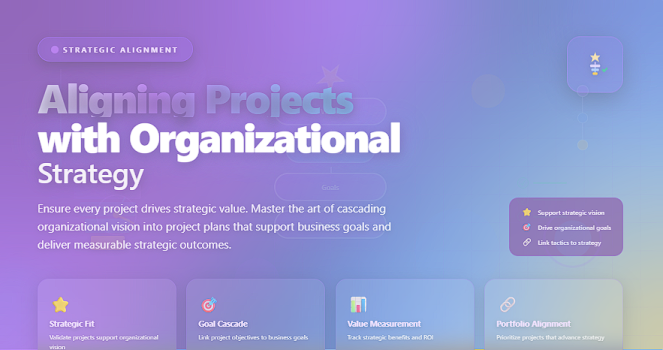
Strategic alignment means ensuring that your project’s objectives, outcomes, and activities directly support the organization’s mission, priorities, and long-term goals.
A strategically aligned project:
✔️ delivers measurable business value
✔️ supports leadership priorities
✔️ accelerates organizational growth
✔️ avoids waste, rework, and misdirection
Misaligned projects consume resources but fail to deliver impact — a silent killer of organizational performance.
✅ Why PMs Must Align Their Plans with Strategy
Strategic alignment helps project managers:
✔️ justify project decisions with business logic
✔️ secure executive support and approvals
✔️ gain stakeholder trust
✔️ ensure better resource allocation
✔️ reduce conflict between departments
✔️ maximize ROI of project investments
When a project is aligned with strategy, leadership sees it as essential, not optional.
⭐ How to Align a Project Plan with Organizational Strategy
Below are the core steps used by senior project managers to ensure complete alignment.
✔️ 1. Understand the Organization’s Strategic Direction
Before planning begins, review:
- mission and vision statements
- annual and long-term strategic plans
- KPIs leadership is measured on
- recent performance reports
- competitive and market positioning
If you do not understand the strategy, you cannot align your project to it.
✔️ 2. Translate Strategic Goals into Project Objectives
Ask yourself:
➡️ What strategic problem does this project solve?
➡️ Which executive goal does this initiative support?
➡️ How will success be measured at the organizational level?
Project objectives must directly contribute to business outcomes such as:
✔️ revenue growth
✔️ cost reduction
✔️ process efficiency
✔️ market expansion
✔️ customer satisfaction
✔️ digital transformation
✔️ 3. Engage Stakeholders Early
Involve key stakeholders from:
- strategy offices
- senior leadership
- finance
- operations
- end-user departments
Their insights will guide prioritization, KPIs, and expected outcomes.
Early involvement → reduced conflict later.
📌 Mapping Deliverables to Strategy
How each deliverable contributes to business priorities.
| Project Deliverable | Strategic Priority Supported | Expected Business Impact |
|---|---|---|
| New Customer Portal | Digital transformation | Improves customer satisfaction and reduces service costs. |
| Automated Reporting Dashboard | Data-driven decision-making | Speeds up decisions and increases executive visibility. |
| Process Reengineering | Operational efficiency | Reduces processing time and eliminates waste. |
✔️ 5. Define KPIs That Reflect Organizational Goals
Examples of aligned KPIs:
✔️ reduce processing time by 30%
✔️ increase customer satisfaction by 10 points
✔️ lower operational cost by 15%
✔️ reduce defect rate by 40%
✔️ deliver faster reporting cycles
KPIs must be measurable and directly connected to the company’s strategic metrics.
✔️ 6. Validate Alignment with Executives
Review your plan with senior leaders to ensure:
✔️ the project supports current strategic priorities
✔️ the scope reflects business expectations
✔️ KPIs measure real business outcomes
✔️ risks reflect organizational constraints
Leadership validation strengthens confidence and resource support.
✔️ 7. Integrate Strategy into Daily Project Decisions
Strategic alignment is not a one-time activity — it is ongoing.
Check strategic alignment when making decisions about:
✔️ scope changes
✔️ feature prioritization
✔️ vendor selection
✔️ resource reallocation
✔️ deadlines and trade-offs
When choices get difficult, use one question:
➡️ Does this decision move the organization toward its goals?
⭐ Benefits of Strategically Aligned Project Plans
✔️ clearer project justification
✔️ stronger executive sponsorship
✔️ improved stakeholder engagement
✔️ better ROI
✔️ fewer conflicts over priorities
✔️ increased project success rate
⭐ Final Thoughts
Strategic alignment is the foundation of high-impact project management.
When your project plan clearly connects to organizational goals, you achieve stronger results, faster approvals, and long-term credibility.
“Projects succeed when they serve a purpose bigger than themselves.”