 MElkhateeb
➡️ Introduction
Managing one project requires structure, clarity, and discipline — but managing multiple concurrent projects requires an entirely different level of mastery.
Project managers today are often responsible for 3, 5, or even 10 projects at the same time, each with its own deadlines, stakeholders, risks, and priorities. Without a solid planning approach, everything quickly becomes overwhelming.
Top 5 Project Management Software
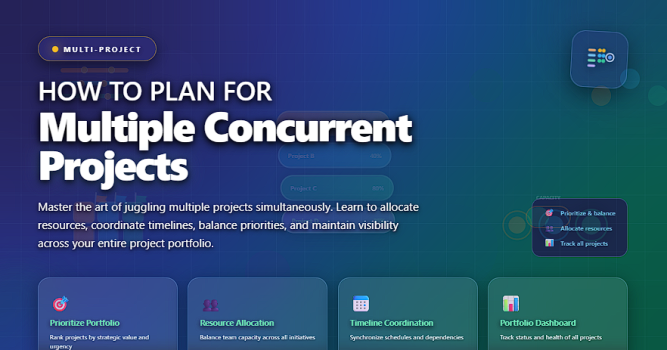
This article explains how to plan multiple concurrent projects using proven techniques that improve focus, control, and delivery consistency. You’ll learn how to balance resources, stagger timelines, avoid conflicts, and maintain visibility across all active initiatives.
✅ Step 1: Get a Complete View of All Projects
Before planning anything, gather all critical information for each project:
✔️ scope
✔️ deadlines
✔️ budget
✔️ resource needs
✔️ stakeholders
✔️ constraints
Most PMs fail because they plan each project independently instead of using a portfolio-level perspective.
✅ Step 2: Prioritize Projects Based on Strategic Value
Not all projects have equal importance.
Some bring higher value, urgency, or risk.
Use criteria such as:
✔️ strategic alignment
✔️ revenue or cost impact
✔️ stakeholder importance
✔️ dependencies
✔️ regulatory or contractual obligations
This ensures that the most important projects receive the strongest focus.
📅 High-Level Multi-Project Schedule
A simplified view to balance tasks and deadlines across multiple projects.
| Project | Start | End | Priority |
|---|---|---|---|
| Project Alpha | Jan 10 | Mar 15 | High |
| Project Beta | Feb 01 | Apr 05 | Medium |
| Project Delta | Jan 20 | May 10 | High |
✅ Step 4: Balance Resources Across All Projects
Resource overload is the #1 cause of failure in multi-project environments.
Strategies include:
✔️ map team availability
✔️ identify overutilized roles
✔️ assign buffers
✔️ use skill-based allocation
✔️ avoid starting all projects at once
Tools such as resource histograms, capacity planning, and workload dashboards are essential here.
✅ Step 5: Establish Clear Communication Channels
When juggling multiple projects, communication must be structured and predictable.
Use:
✔️ weekly portfolio updates
✔️ standardized reporting formats
✔️ shared dashboards
✔️ escalation paths
✔️ stakeholder alignment meetings
A consistent communication rhythm prevents confusion and reduces rework.
✅ Step 6: Track Progress Using Dashboards
Dashboards help PMs instantly understand:
✔️ what is on track
✔️ what is behind
✔️ what is at risk
✔️ where bottlenecks exist
✔️ how resources are performing
Tools like Power BI, Monday.com, Smartsheet, and Excel dashboards make multi-project tracking much easier.
✅ Step 7: Continuously Adjust and Rebalance
Multi-project planning is dynamic, not static.
Rebalancing should occur whenever there is:
✔️ a new change request
✔️ a delay in one project
✔️ resource shortages
✔️ shifting priorities
✔️ unexpected risks
Your project portfolio should adapt, not break.
⭐ Final Thoughts
Managing multiple concurrent projects requires a portfolio mindset, not a task manager mindset.
A strong planning approach helps you:
✔️ stay organized
✔️ optimize resources
✔️ prioritize correctly
✔️ avoid burnout
✔️ deliver predictable results
The best project managers don’t work harder — they work strategically across all projects.