 MElkhateeb
Introduction
Milestones are one of the most powerful yet misunderstood elements of project planning. When used correctly, they provide clarity, alignment, and control. When used poorly, they become empty dates that add little value.
Top 5 Project Management Software
✅ Meaningful milestones show real progress
✅ They align teams and stakeholders
✅ They support better tracking and decision-making
Setting milestones is not about adding markers to a timeline—it is about defining what success looks like at key points in the project.
What Is a Project Milestone?
A project milestone is a significant point or event in the project timeline that represents the completion of an important phase, deliverable, or decision.
Milestones answer the question:
✅ What important outcome has been achieved?
Unlike tasks, milestones:
✅ Have no duration
✅ Do not consume effort or resources
✅ Represent achievement, approval, or readiness
They act as checkpoints, not work items.
Why Meaningful Milestones Matter
Milestones are essential for maintaining control and confidence throughout the project.
Well-defined milestones:
✅ Provide clear progress indicators
✅ Improve communication with stakeholders
✅ Support go/no-go decisions
✅ Reduce ambiguity in reporting
Without meaningful milestones, progress becomes subjective and difficult to explain.
Characteristics of a Meaningful Milestone
Not every date deserves to be a milestone. A milestone must represent something important.
A meaningful milestone:
✅ Reflects a tangible outcome or decision
✅ Is easy to understand and verify
✅ Has clear acceptance criteria
✅ Adds value to tracking and communication
If a milestone does not change how the project is managed or communicated, it is probably unnecessary.
Common Types of Project Milestones
Milestones can represent different kinds of achievements depending on the project.
Phase Completion Milestones
These mark the end of a major phase.
Examples:
✅ Planning phase completed
✅ Design phase approved
✅ Testing phase finished
They help structure long projects and support phased reviews.
Approval and Decision Milestones
These represent formal decisions or sign-offs.
Examples:
✅ Requirements approved
✅ Budget approved
✅ Go-live authorized
Decision milestones are critical for governance and accountability.
Delivery and Readiness Milestones
These indicate that something is ready for use or transition.
Examples:
✅ System ready for deployment
✅ Training completed
✅ Handover to operations
They focus attention on readiness, not just completion.
How to Set Meaningful Project Milestones
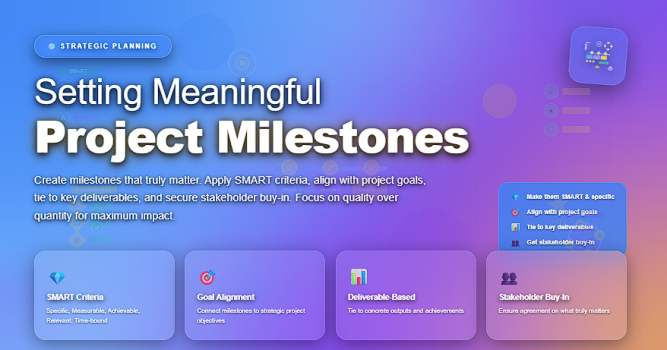
Start with Deliverables, Not Dates
Milestones should be driven by outcomes, not calendar preferences.
✅ Define what must be completed
✅ Confirm how completion will be verified
✅ Then assign the milestone date
This ensures milestones represent reality, not optimism.
Limit the Number of Milestones
Too many milestones reduce clarity.
Best practice:
✅ Use milestones only for major achievements
✅ Avoid creating milestones for minor tasks
✅ Keep milestones visible and memorable
Quality matters more than quantity.
Align Milestones with Stakeholder Needs
Different stakeholders care about different outcomes.
✅ Executives focus on approvals and major phases
✅ Clients focus on deliverables and readiness
✅ Teams focus on internal completion points
Effective milestones reflect these perspectives.
Ensure Milestones Are Measurable
A milestone should have a clear “yes or no” status.
Avoid vague milestones such as:
• “Design mostly done”
Prefer:
✅ “Design approved by client”
Clear criteria prevent debate and confusion.
Common Mistakes in Milestone Setting
Even experienced project managers make milestone mistakes.
Common issues include:
✅ Treating milestones like zero-day tasks
✅ Assigning owners or effort to milestones
✅ Creating milestones without clear meaning
✅ Using milestones only for reporting
Milestones should guide the project, not just decorate the schedule.
Milestones and Progress Reporting
Milestones play a key role in progress communication.
✅ Task progress shows how work is advancing
✅ Milestone achievement shows what has been accomplished
For stakeholders, milestone status is often more meaningful than task-level detail.
Best Practices for Managing Milestones
High-performing project teams follow these principles:
✅ Review milestone status regularly
✅ Communicate milestone achievement clearly
✅ Use milestones as decision checkpoints
✅ Adjust future milestones if scope changes
✅ Keep milestone definitions stable
Strong milestone discipline builds trust in the schedule.
Final Thoughts
Setting meaningful project milestones is a leadership skill, not an administrative task. Milestones shape how progress is understood, discussed, and controlled.
✅ Good milestones create clarity and confidence
✅ Poor milestones create noise and false progress
When milestones represent real achievements and decisions, they become one of the most effective tools a project manager can use to guide a project to success.