 MElkhateeb
➡️ Introduction
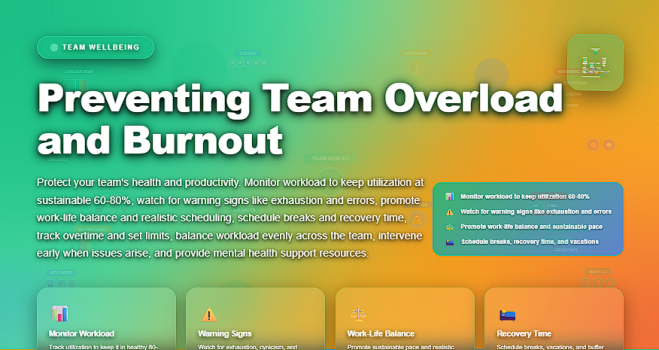
Project success is not only measured by deadlines, budgets, and deliverables — it is also measured by the health and sustainability of the project team.
One of the most common causes of project failure today is team overload, which often leads to burnout, disengagement, errors, and high turnover.
Top 5 Project Management Software
Preventing burnout is no longer a “nice-to-have” leadership skill.
For project managers, it is a core responsibility that directly affects productivity, quality, and long-term organizational performance.
This article explains why overload happens, how burnout develops, and what project managers can do — practically and systematically — to prevent it.
✅ What Is Team Overload and Burnout?
Team overload occurs when individuals are consistently assigned more work than they can reasonably complete within the available time, skills, or energy levels.
Burnout is the long-term result of unmanaged overload and is characterized by:
✔️ physical and mental exhaustion
✔️ reduced motivation
✔️ declining performance
✔️ emotional detachment
✔️ increased mistakes and absenteeism
Burnout is not a personal weakness — it is a management and system failure.
✅ Common Causes of Team Overload in Projects
Team overload usually comes from structural issues, not effort problems:
✔️ Unrealistic schedules
✔️ Poor resource planning
✔️ Too many parallel tasks
✔️ Frequent scope changes
✔️ Lack of prioritization
✔️ Underestimating effort
✔️ Constant “urgent” work
✔️ No recovery time between milestones
Recognizing these root causes is the first step toward prevention.
✅ Practical Ways to Prevent Team Overload
Project-level actions that protect performance and wellbeing.
| Strategy | Description | Why It Works |
|---|---|---|
| Realistic Workload Planning | Estimate effort honestly and include buffers. | Prevents constant time pressure. |
| Clear Prioritization | Limit active tasks and define what matters most. | Reduces mental overload. |
| Capacity-Based Assignment | Assign work based on availability, not job title. | Balances effort across the team. |
| Regular Check-Ins | Discuss workload, stress, and blockers openly. | Identifies burnout early. |
| Controlled Scope Changes | Assess workload impact before approving changes. | Prevents silent overload. |
| Encouraging Breaks | Support rest, time off, and recovery periods. | Sustains long-term performance. |
✅ How Project Managers Can Detect Burnout Early
Early warning signs often appear before performance drops:
✔️ Missed deadlines from high performers
✔️ Increased errors or rework
✔️ Withdrawal from meetings
✔️ Irritability or disengagement
✔️ Reduced collaboration
✔️ Frequent overtime becoming “normal”
Ignoring these signals allows burnout to spread across the team.
✅ Practical Actions Project Managers Should Take
✔️ Balance Workload, Not Just Deadlines
Track how many tasks each team member is handling — not just whether tasks are assigned.
✔️ Limit Work in Progress
Too many parallel tasks increase stress and reduce focus. Fewer tasks = better flow.
✔️ Protect the Team from Unnecessary Pressure
Filter unrealistic demands from stakeholders and escalate responsibly.
✔️ Normalize Saying “No”
A healthy project culture allows trade-off discussions instead of silent overload.
✔️ Lead by Example
If the project manager is constantly overworked, the team will follow.
❌ Common Mistakes That Cause Burnout
❌ Rewarding overtime instead of efficiency
❌ Treating overload as “commitment”
❌ Ignoring early warning signs
❌ Constantly re-prioritizing without removing work
❌ Planning without buffers
❌ Assuming silence means everything is fine
⭐ Best Practices
✔️ Plan with realistic capacity
✔️ Review workloads weekly
✔️ Encourage honest conversations
✔️ Build buffers into schedules
✔️ Celebrate sustainable delivery, not heroics
✔️ Treat wellbeing as a project constraint
⭐ Final Thoughts
Preventing team overload and burnout is not about slowing projects down —
it’s about making delivery sustainable, predictable, and high-quality.
Projects succeed when people are energized, focused, and supported — not exhausted.
Great project managers don’t just deliver results.
They protect the people who deliver them.