 MElkhateeb
➡️ Introduction
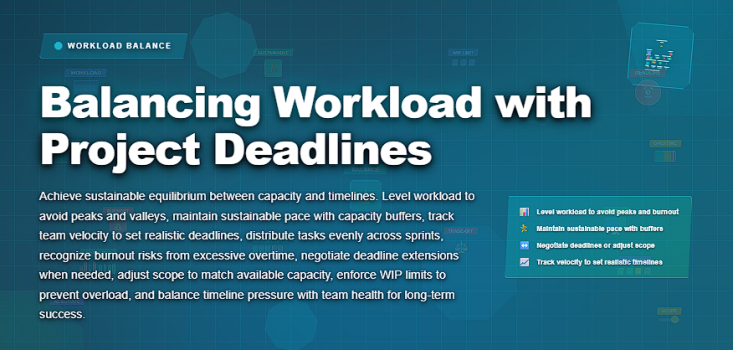
Successfully delivering a project is never just about meeting deadlines — it’s about doing so without overloading the team or compromising quality.
Balancing workload with project deadlines is one of the most important — and most difficult — responsibilities of a project manager.
Top 5 Project Management Software
When the schedule is tight and the workload is heavy, teams face pressure that can quickly turn into stress, errors, overtime, and declining performance.
But with the right planning methods, workload distribution, and forecasting techniques, project managers can maintain delivery momentum while protecting the team’s wellbeing.
This article explains why balancing workload and deadlines is complex, what factors cause misalignment, and practical strategies PMs can apply to keep projects on track without burning their teams out.
✅ Why Balancing Workload and Deadlines Is So Challenging
Balancing workload is difficult because multiple forces collide at once:
✔️ deadlines set by stakeholders
✔️ limited team capacity
✔️ unexpected risks or changes
✔️ inaccurate initial estimates
✔️ multiple projects competing for the same people
✔️ high variability in task complexity
You can have a perfect schedule on paper — but if the workload is not aligned with real capacity, the project will slip.
Balancing deadlines means balancing human limitations, task realities, and strategic priorities simultaneously.
✅ What Happens When Workload and Deadlines Aren’t Aligned
Teams experience predictable issues when deadlines do not reflect actual workload:
✔️ growing backlog of unfinished tasks
✔️ increased overtime or weekend work
✔️ pressure-driven mistakes
✔️ bottlenecks around specialists
✔️ poor quality and rework
✔️ project delays that cascade into future phases
✔️ team frustration or burnout
A misaligned workload system creates hidden risk — the team looks busy, but progress isn’t moving at the expected speed.
📌 Core Principles for Balancing Workload with Deadlines
To balance workload and timing effectively, strong project managers follow these principles:
1️⃣ Plan based on real capacity, not theoretical availability
Assume 70–85% of capacity is usable due to meetings, context switching, and overhead.
2️⃣ Design schedules around critical path work
Not all tasks impact deadlines equally — focus on what truly moves the project forward.
3️⃣ Use rolling wave planning
Adjust workload distribution as new information becomes available.
4️⃣ Limit work in progress (WIP)
Fewer simultaneous tasks = faster completion and fewer delays.
5️⃣ Protect buffer time for high-risk tasks
Deadlines without buffers are wishes, not plans.
➡️ Practical Strategies for Balancing Workload With Project Deadlines
✅ Early Warning Signs That Workload and Deadlines Are Misaligned
Watch for these signals:
✔️ frequent extension requests
✔️ growing backlog of half-finished tasks
✔️ increased team stress or overtime
✔️ recurring bottlenecks around specialist roles
✔️ slow progress despite high effort
✔️ critical-path tasks regularly slipping
These indicators show your workload plan needs recalibration.
✅ Practical Actions for Project Managers
✔️ rebalance tasks when utilization exceeds 85%
✔️ negotiate unrealistic deadlines early, not late
✔️ reduce unnecessary meetings during peak workload periods
✔️ break large tasks into smaller, trackable steps
✔️ limit work in progress to speed up delivery
✔️ review upcoming deadlines 2–3 weeks in advance
When workload and deadlines conflict, clarity and proactive adjustment are the PM’s most powerful tools.
❌ Common Mistakes That Lead to Imbalance
❌ planning as if everyone is available 100% of the time
❌ relying on hope instead of data
❌ overloading high performers because they are faster
❌ ignoring team feedback on capacity
❌ failing to communicate upcoming peaks
❌ adding scope without adjusting deadlines
These mistakes cause preventable stress and predictable schedule failures.
⭐ Best Practices
✔️ use capacity data to shape every deadline
✔️ maintain transparent workload dashboards
✔️ apply rolling wave planning for accuracy
✔️ build buffers into high-risk areas
✔️ update workload forecasts weekly
✔️ protect the team from unrealistic expectations
⭐ Final Thoughts
Balancing workload with project deadlines is not about pushing the team harder —
it’s about designing a system where effort, capacity, and expectations align.
When balance is achieved, teams experience:
✔️ predictable progress
✔️ reduced stress
✔️ fewer delays
✔️ higher quality output
✔️ stronger long-term performance
Great project managers don’t just manage schedules.
They balance human capacity with strategic priorities — ensuring that deadlines are met without breaking the team.