 MElkhateeb
➡️ Introduction
Sprint Planning is a structured working session where the team decides:
Top 5 Project Management Software
✔️ Why this sprint matters (Sprint Goal)
✔️ What work will be done (Sprint Backlog selection)
✔️ How the work will be delivered (task breakdown + ownership approach)
Sprint Planning is not:
❌ a status meeting
❌ a negotiation to “fit more work”
❌ a session where one person assigns tasks to others
❌ a re-discussion of strategy and priorities that should have been decided earlier
✅ Preconditions for a Good Sprint Planning Session
Sprint Planning becomes difficult when inputs are messy. Before the meeting, ensure:
✔️ top backlog items are refined and understood
✔️ acceptance criteria are clear
✔️ dependencies are visible
✔️ risks are noted
✔️ team capacity is known (vacations, support work, meetings)
✔️ Definition of Done is clear
A sprint can only be planned well if the backlog is ready enough to plan.
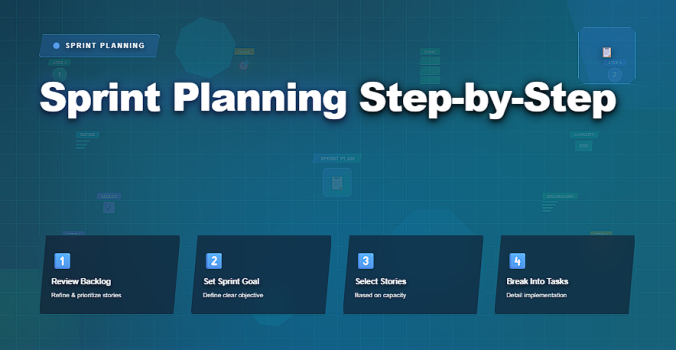
✅ Sprint Planning Step-by-Step
A practical workflow to create a clear sprint goal and an executable sprint backlog.
| Step | What You Do | Output |
|---|---|---|
| 1) Confirm Capacity | Calculate available team capacity after meetings, support work, and time off | Realistic sprint capacity baseline |
| 2) Reconfirm Sprint Objective | Align on the sprint purpose based on roadmap priorities and current constraints | Draft Sprint Goal |
| 3) Review Top Backlog Items | Clarify scope, acceptance criteria, dependencies, and expected value | Shared understanding of candidate work |
| 4) Select Work for the Sprint | Pull items until capacity is reached while maintaining focus on the goal | Proposed Sprint Backlog |
| 5) Break Work into Tasks | Decompose stories into tasks and identify handoffs or sequencing | Execution-ready task plan |
| 6) Validate Feasibility | Check constraints: dependencies, risks, missing info, Definition of Done | Adjusted backlog + risk visibility |
| 7) Finalize Sprint Goal | Confirm one clear goal that connects work to business value | Final Sprint Goal + sprint focus |
| 8) Define Success Rules | Agree on acceptance criteria, DoD, and how progress will be tracked | Clear completion and tracking rules |
✅ What a “Good Sprint Goal” Looks Like
A strong Sprint Goal is:
✔️ one sentence
✔️ outcome-oriented (not a list of tasks)
✔️ clear enough to guide trade-offs
✔️ stable even if details shift
Examples:
✔️ “Enable users to export reports in CSV with basic filters.”
✔️ “Reduce payment failures by improving retry logic and error handling.”
✔️ “Deliver the first usable version of the onboarding flow for internal testing.”
Avoid goals like:
❌ “Finish 12 stories”
❌ “Work on backlog items”
✅ How to Avoid Overcommitting
Overcommitment is usually caused by:
❌ planning based on hope
❌ ignoring non-project work
❌ taking too many parallel stories
❌ unclear acceptance criteria
❌ underestimating integration/review effort
Strong controls:
✔️ capacity-first planning
✔️ limit work in progress
✔️ include review, testing, and integration in estimates
✔️ keep 10–20% capacity as a safety margin in volatile environments
✅ Sprint Planning Outputs (Minimum Standard)
At the end of Sprint Planning, you should have:
✔️ Sprint Goal (clear and stable)
✔️ Sprint Backlog (selected items)
✔️ Tasks + sequencing (enough detail to start day one)
✔️ Risks and dependencies visible
✔️ Agreement on Definition of Done
✔️ Clear rules for scope change during the sprint
If those outputs are missing, the sprint will start with uncertainty.
❌ Common Mistakes in Sprint Planning
❌ letting planning become backlog refinement for unclear items
❌ allowing stakeholders to add work during the meeting
❌ selecting items before confirming capacity
❌ treating tasks as assignments instead of team-owned work
❌ planning without discussing dependencies
❌ ending without a clear Sprint Goal
⭐ Best Practices
✔️ keep Sprint Planning focused on decisions, not debates
✔️ use refined backlog items only
✔️ plan around the goal, not around story count
✔️ validate feasibility before commitment
✔️ include testing and review in the plan
✔️ keep the sprint backlog stable after planning unless trade-offs are explicit
⭐ Final Thoughts
Sprint Planning is not about filling the sprint with work.
It is about creating a realistic commitment tied to a clear goal.
Strong teams leave Sprint Planning with focus, shared understanding, and a plan they trust. That confidence shows up in execution quality, stakeholder trust, and predictable delivery.