 MElkhateeb
➡️ Introduction
Projects rarely fail because of poor ideas.
They fail because resources are spread too thin, assigned too late, or allocated without visibility.
Top 5 Project Management Software
Resource allocation is one of the most underestimated disciplines in project management. Many teams rely on assumptions, informal agreements, or last-minute adjustments — until overload, delays, and burnout appear.
A resource allocation template provides structure where intuition often fails.
This guide explains how to use a resource allocation template correctly, what elements it must include, and how managers can apply it to balance workload, protect timelines, and improve delivery outcomes.
✅ What Resource Allocation Really Means
Resource allocation is not just assigning names to tasks.
It is the process of:
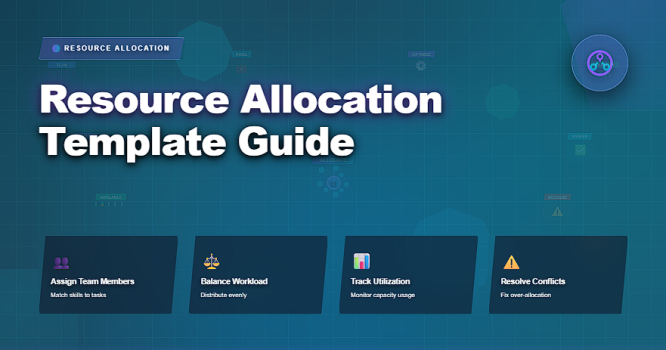
✔️ matching work demand with available capacity
✔️ sequencing assignments over time
✔️ balancing workload across individuals and teams
✔️ identifying conflicts before they become delays
✔️ supporting realistic planning decisions
Without allocation visibility, schedules are guesses.
✅ Why Use a Resource Allocation Template
Templates reduce complexity without removing control.
A good template:
✔️ creates a single source of truth
✔️ exposes overload early
✔️ supports fair workload distribution
✔️ improves forecasting accuracy
✔️ simplifies communication with stakeholders
In Excel or Google Sheets, templates are fast, flexible, and widely accessible.
✅ Key Components of a Resource Allocation Template
What every effective allocation template should include.
| Component | Description | Why It Matters |
|---|---|---|
| Resource Name | Person, role, or team assigned | Clarifies responsibility |
| Availability | Hours or capacity per period | Prevents over-allocation |
| Assigned Tasks | Work allocated to each resource | Shows workload distribution |
| Time Period | Week, sprint, or month | Supports forecasting |
| Utilization Level | Planned load vs capacity | Identifies overload early |
| Notes / Constraints | Holidays, risks, assumptions | Adds context to decisions |
✅ How to Use a Resource Allocation Template Step by Step
A template only works when used consistently.
Recommended approach:
✔️ list all resources and confirm availability
✔️ define the planning time period
✔️ assign tasks based on capacity, not urgency
✔️ review utilization levels
✔️ adjust assignments before finalizing the plan
✔️ revisit allocation regularly
Allocation should be proactive — not reactive.
❌ Common Resource Allocation Mistakes
❌ assuming full availability
❌ allocating based on job title alone
❌ ignoring parallel work
❌ updating allocations too late
❌ overloading top performers
❌ treating allocation as static
These mistakes create invisible risk.
⭐ Best Practices
✔️ plan with realistic capacity
✔️ review allocation weekly
✔️ protect focus by limiting multitasking
✔️ include buffer time
✔️ communicate allocation changes clearly
✔️ align allocation with priorities
⭐ Final Thoughts
A resource allocation template is not bureaucracy.
It is decision support.
When used correctly, it helps managers make informed trade-offs, protect their teams, and deliver projects predictably — without burning people out.
Projects succeed not because resources are unlimited —
but because they are allocated with clarity and discipline.