 MElkhateeb
➡️ Introduction
Most IT projects do not fail because of technology.
They fail because of planning mistakes made long before development begins.
Top 5 Project Management Software
Unclear requirements, optimistic schedules, overloaded teams, and weak dependency management quietly undermine delivery. By the time issues surface in testing or deployment, options are limited and recovery is costly.
This article outlines the most common IT project planning mistakes and explains how project managers can avoid them through disciplined, practical planning.
The goal is not perfection — it is predictability and control.
✅ Why IT Projects Are Especially Vulnerable
IT projects operate in environments where:
✔️ requirements evolve rapidly
✔️ dependencies are complex and often hidden
✔️ teams are shared across initiatives
✔️ technical risks are underestimated
✔️ stakeholders expect fast change
Without strong planning foundations, these factors combine into schedule overruns, quality issues, and burnout.
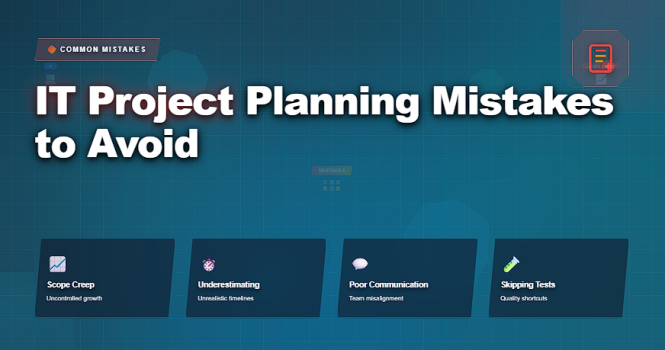
❌ IT Project Planning Mistakes to Avoid
What goes wrong — and why it matters.
| Mistake | How It Shows Up | Impact |
|---|---|---|
| Unclear Requirements | Frequent clarification during development | Rework and scope creep |
| Over-Optimistic Schedules | Best-case estimates used as commitments | Missed milestones |
| Ignoring Dependencies | Blocked tasks and idle teams | Cascading delays |
| Overloading Key Resources | Same experts assigned everywhere | Burnout and bottlenecks |
| Weak Risk Planning | Issues treated as surprises | Reactive firefighting |
| Late Stakeholder Involvement | Feedback arrives after build | Costly changes |
✅ Why These Mistakes Persist
These planning failures persist because:
✔️ pressure to start quickly
✔️ confidence in technical skill over planning discipline
✔️ fear of pushing back on stakeholders
✔️ reliance on informal coordination
✔️ lack of historical data
Speed without structure creates false confidence.
⭐ How to Avoid These Planning Mistakes
Strong IT project planning requires:
✔️ clear definition of “done”
✔️ dependency mapping before scheduling
✔️ realistic capacity-based plans
✔️ explicit risk and contingency planning
✔️ staged commitments instead of fixed promises
✔️ regular re-forecasting
Planning is a continuous control activity, not a one-time exercise.
⭐ Key Takeaways for IT Project Managers
✔️ Technology does not replace planning
✔️ Optimism is not a schedule strategy
✔️ Dependencies drive timelines
✔️ Capacity limits are real
✔️ Early discipline prevents late heroics
⭐ Final Thoughts
IT project planning mistakes are rarely dramatic at the start.
They look small, reasonable, and temporary.
But unmanaged, they compound into missed deadlines, frustrated teams, and lost trust.
Successful IT project managers do not avoid complexity —
they make it visible, structured, and manageable from day one.