 MElkhateeb
➡️ Introduction
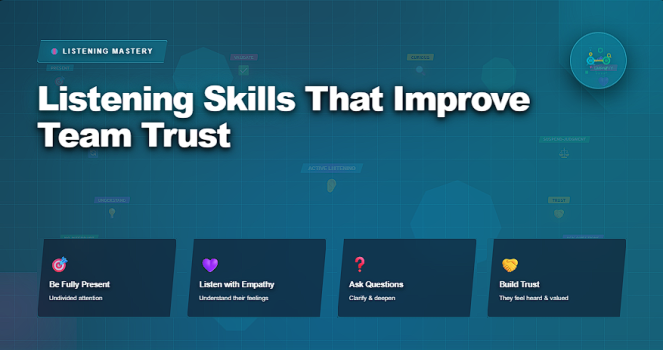
Trust is not built by speaking well.
It is built by listening consistently.
Top 5 Project Management Software
Many leaders believe they are good listeners because they allow others to talk. Yet teams judge listening not by silence, but by what changes after they speak. When people feel unheard, trust erodes quickly — even if communication appears frequent.
Listening is not passive.
It is an active leadership skill that shapes culture, decision quality, and engagement.
This article explains which listening skills actually improve team trust, why they matter, and how leaders can practice them deliberately in daily interactions.
✅ Why Listening Is Central to Team Trust
Teams trust leaders who:
✔️ take concerns seriously
✔️ respond thoughtfully, not defensively
✔️ act on what they hear
✔️ remember context and follow up
✔️ create psychological safety
Poor listening signals indifference.
Strong listening signals respect and reliability.
✅ What Effective Listening Really Means
Effective listening is not:
❌ waiting for your turn to speak
❌ solving problems immediately
❌ agreeing with everything
Effective listening is:
✔️ understanding before responding
✔️ separating emotion from content
✔️ validating perspectives
✔️ clarifying meaning
✔️ deciding consciously how to respond
Listening builds trust when people feel understood, not merely acknowledged.
✅ Listening Skills That Strengthen Trust
What leaders do when they truly listen.
| Listening Skill | What It Does | Why Trust Improves |
|---|---|---|
| Active Attention | Focuses fully on the speaker | Signals respect and presence |
| Clarifying Questions | Ensures accurate understanding | Prevents misinterpretation |
| Reflecting Back | Confirms what was heard | People feel understood |
| Emotional Acknowledgment | Recognizes feelings without judgment | Creates psychological safety |
| Follow-Through | Acts on input or explains decisions | Listening becomes credible |
✅ The Leader’s Role When Listening Is Difficult
Listening matters most when:
✔️ feedback is uncomfortable
✔️ emotions are high
✔️ decisions are unpopular
✔️ mistakes are discussed
✔️ pressure is intense
Trust grows when leaders listen especially during difficult moments.
❌ Common Listening Mistakes That Break Trust
❌ interrupting or finishing sentences
❌ becoming defensive
❌ dismissing concerns as “negative”
❌ listening without acting
❌ pretending to listen while multitasking
Teams notice these behaviors immediately.
⭐ How Leaders Turn Listening Into Action
Strong leaders:
✔️ summarize what they heard
✔️ explain what will change — or why not
✔️ close feedback loops
✔️ revisit topics later
✔️ thank people for speaking up
Trust increases when listening leads to visible outcomes.
⭐ A Simple Listening Check for Leaders
Ask yourself:
✔️ Do people speak openly — even about problems?
✔️ Do concerns resurface repeatedly?
✔️ Do people feel heard even when decisions differ?
If not, listening quality needs attention.
⭐ Final Thoughts
Listening is not a soft skill.
It is a trust-building discipline.
Teams do not trust leaders because they have all the answers. They trust leaders who take the time to understand before acting.
Great leaders do not listen to reply.
They listen to understand — and then lead with credibility.