 MElkhateeb
➡️ Introduction
Every successful project thrives on clear, consistent, and structured communication.
Without it, even the most experienced teams can lose alignment, miss deadlines, or duplicate effort.
Top 5 Project Management Software
A Project Communication Plan serves as your roadmap for how information will flow between stakeholders — what needs to be shared, when, by whom, and through which channels.
It transforms random updates into a systematic communication process that builds trust and accountability.
This guide walks you through how to build a strong, practical communication plan that supports collaboration and decision-making at every stage.
✅ What Is a Project Communication Plan?
A Project Communication Plan is a formal document outlining how project information will be managed and distributed.
It ensures that everyone involved — team members, sponsors, and clients — receives the right information at the right time.
The plan defines:
✔️ Communication goals and objectives.
✔️ Stakeholder information needs.
✔️ Frequency and format of updates.
✔️ Roles and responsibilities.
✔️ Tools and platforms for communication.
✅ Why You Need a Communication Plan
✔️ Keeps all stakeholders aligned on project goals.
✔️ Minimizes misunderstandings and rework.
✔️ Builds transparency and trust among team members.
✔️ Ensures faster, data-driven decision-making.
✔️ Supports consistent progress tracking and accountability.
✅ Key Components of a Project Communication Plan
Core sections that define who communicates what, when, and how.
| Component | Description | Best Practice |
|---|---|---|
| 1. Objectives | Define what you want to achieve with communication — clarity, alignment, engagement, or reporting. | Set measurable goals (e.g., “100% stakeholder awareness of milestone status”). |
| 2. Stakeholder Analysis | Identify who needs information, their roles, and their influence level. | Segment by interest and power using a stakeholder matrix. |
| 3. Information Requirements | Specify what data or updates each stakeholder group needs. | Align content type (status, risks, KPIs) with audience expectations. |
| 4. Communication Methods | List channels like meetings, dashboards, emails, or tools (e.g., Monday.com, Miro). | Choose platforms that match stakeholder accessibility and urgency. |
| 5. Frequency and Timing | Determine how often updates occur and their preferred timing. | Use consistent schedules (weekly reports, monthly reviews). |
| 6. Roles and Responsibilities | Assign ownership for preparing, reviewing, and sending information. | Use a RACI chart to clarify who is Responsible, Accountable, Consulted, and Informed. |
| 7. Feedback Mechanisms | Define how feedback and questions will be collected and resolved. | Encourage open channels and regular retrospectives to improve communication quality. |
✅ Steps to Build Your Communication Plan
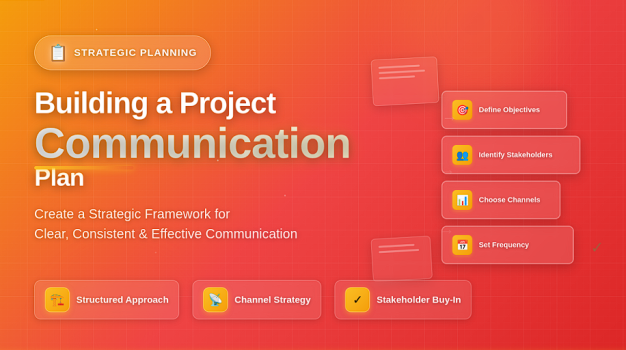
✔️ Step 1: Identify all stakeholders and categorize them by communication needs.
✔️ Step 2: Define communication goals aligned with project objectives.
✔️ Step 3: Select appropriate channels and tools for updates and collaboration.
✔️ Step 4: Determine communication frequency for each group.
✔️ Step 5: Document responsibilities and approval workflows.
✔️ Step 6: Establish feedback loops and escalation paths.
✔️ Step 7: Review and refine the plan regularly as the project evolves.
✅ Tools to Support Your Communication Plan
✔️ Monday.com – Centralized dashboards and team collaboration boards.
✔️ Miro – Interactive boards for planning and visual collaboration.
✔️ Smartsheet – Automated communication tracking and reminders.
✔️ Power BI – Visual storytelling for executives and sponsors.
✔️ Microsoft Teams / Slack – Real-time messaging and quick updates.
✅ Common Mistakes to Avoid
❌ Ignoring stakeholder communication preferences.
❌ Overloading people with unnecessary information.
❌ Not tracking whether messages are understood.
❌ Failing to update the plan after major scope changes.
❌ Treating communication as an afterthought instead of a deliverable.
✅ Best Practices
✔️ Start communication planning during project initiation, not execution.
✔️ Keep the plan simple, visual, and accessible.
✔️ Align communication cadence with project milestones.
✔️ Make it a living document — review it monthly.
✔️ Use dashboards and reports instead of lengthy emails when possible.
✅ Final Thoughts
A well-structured communication plan turns information chaos into coordinated action.
It keeps your project team informed, your stakeholders confident, and your decisions data-driven.
Great communication doesn’t just report progress — it drives it.