 MElkhateeb
➡️ Introduction
Milestones are more than points in time — they are psychological markers of progress, alignment, and momentum.
When teams reach important milestones, something powerful happens: confidence increases, motivation strengthens, and everyone reconnects with the project’s purpose.
Top 5 Project Management Software
Yet many project managers rush past milestones without acknowledgment.
In fast-paced environments, it can feel like there’s “no time to celebrate.”
But research shows that recognizing progress improves performance, reduces burnout, and increases team commitment — making milestone celebrations a strategic leadership practice, not a luxury.
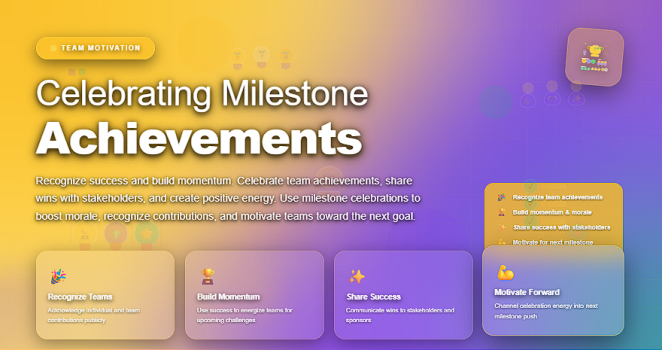
This article explores why milestone celebrations matter, how to design meaningful recognition moments, and how to use celebrations to increase productivity and unity across your project team.
✅ Why Milestones Deserve Celebration
✔️ They Reinforce Progress
Projects can feel overwhelming, especially long-term initiatives.
Celebrating milestones gives your team a moment to pause and recognize how far they’ve come.
✔️ They Boost Motivation and Morale
Humans are wired to respond positively to acknowledgment.
A small celebration can fuel weeks of renewed focus.
✔️ They Strengthen Team Cohesion
Shared wins create shared identity.
Teams that celebrate together communicate better and resolve conflict faster.
✔️ They Reduce Stress and Burnout
Recognition acts as a psychological reset, helping teams recharge before the next phase of work.
✔️ They Increase Stakeholder Confidence
Highlighting milestone achievements shows progress, transparency, and credibility.
✅ What Types of Milestones Should Be Celebrated?
✔️ Major Deliverables Completed
Such as launching a prototype, finishing a design phase, or completing testing.
✔️ High-Risk Tasks Finished Successfully
Completing risky dependencies or resolving major blockers.
✔️ Key Client Approvals
Securing stakeholder endorsement for scope, budget, or design.
✔️ Team Performance Milestones
Training completed, certifications earned, or major learning accomplishments.
✔️ Schedule-Based Milestones
Completing a phase on time — especially if the timeline was tight.
✅ How to Celebrate Milestone Achievements Effectively
✔️ 1. Make the Celebration Meaningful
Not all milestones require a party — sometimes acknowledgment is enough.
What matters is intentional recognition.
Meaningful ideas include:
- A personalized message in a team meeting
- A highlight section in your weekly status update
- A shout-out on the company communication platform
- A short recognition video
- A virtual coffee chat or “appreciation moment”
✔️ 2. Celebrate Team Effort and Individual Contributions
People want to feel seen.
Call out:
- problem-solvers
- collaborators
- quiet contributors
- those who overcame challenges
Recognition must be specific to have impact.
✔️ 3. Capture the Win Publicly
Share milestone accomplishments with executives, clients, or cross-functional teams.
This builds credibility and keeps momentum high.
✔️ 4. Connect the Milestone to Project Goals
Teams must see why their work matters.
Explain how this milestone:
- reduces project risk
- moves the project closer to completion
- unlocks future work
- strengthens client confidence
✔️ 5. Use Celebrations as Learning Moments
Milestones are perfect opportunities to reflect on:
- what worked well
- what could be improved
- what strengths the team demonstrated
This builds continuous improvement into the project culture.
✅ Creative Ways to Celebrate Milestones
✔️ Virtual Celebration Wall
Use Miro, Teams, or Slack to post congratulations and images.
✔️ Small Rewards
Gift cards, badges, certificates, or digital appreciation tokens.
✔️ Celebrate with Data
Share dashboards showing real progress.
Teams love to see their impact.
✔️ Team Spotlights
Highlight someone’s contribution in a short profile or interview.
✔️ Milestone Memory Book
At the end of the project, create a visual story of all achievements.
✔️ Mini Showcases
Demo what’s been completed — stakeholders love transparency.
❌ Common Mistakes to Avoid
❌ Ignoring milestones because “there’s more work to do”
❌ Only celebrating at the end of the project
❌ Recognizing only a few people instead of the full team
❌ Making celebrations generic instead of personal
❌ Celebrating inconsistently
Consistency and sincerity matter far more than budget.
⭐ Best Practices for Meaningful Milestone Recognition
✔️ Be timely — celebrate immediately after the milestone
✔️ Be specific — name the actions that contributed to success
✔️ Be inclusive — acknowledge everyone involved
✔️ Be visible — share progress widely
✔️ Be consistent — create a recognition culture
✔️ Be aligned — link celebrations back to project strategy
⭐ Final Thoughts
Celebrating milestones isn’t just a feel-good activity — it is a strategic leadership tool.
When done well, it elevates morale, accelerates performance, strengthens relationships, and creates a positive project culture that fuels long-term success.
Milestones are not just checkpoints.
They are moments that remind teams why the journey matters.