 MElkhateeb
➡️ Introduction
Clear, consistent communication is one of the strongest predictors of project success. Teams need visibility, stakeholders need updates, and leadership needs timely insights to make decisions.
A Communication Plan ensures everyone knows what information will be shared, when, how often, with whom, and through which channels.
Top 5 Project Management Software
Without a structured communication plan:
❌ misunderstandings increase
❌ expectations drift
❌ decisions get delayed
❌ stakeholders lose confidence
❌ project risks escalate
This article provides a complete communication plan example, showing you how to structure communication across all audiences and project phases.
✅ What Is a Communication Plan?
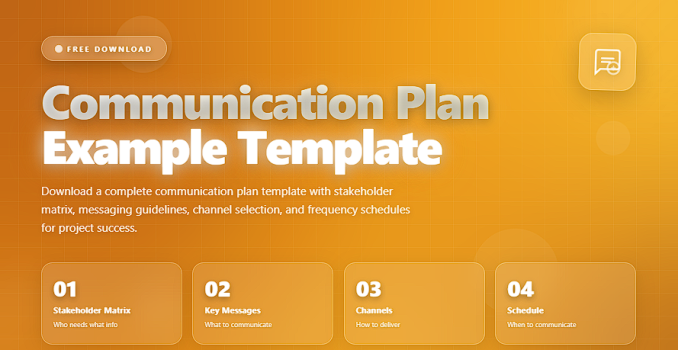
A Communication Plan is a document that outlines how project information will be distributed to stakeholders, team members, and executives.
It covers:
✔️ what information will be shared
✔️ who receives it
✔️ the frequency of communication
✔️ the format and method
✔️ the responsible sender
A communication plan is essential for alignment, transparency, and predictable information flow.
✅ Why You Need a Communication Plan
✔️ Ensures all stakeholders receive the right information
✔️ Prevents confusion during fast-moving projects
✔️ Supports decision-making with timely updates
✔️ Minimizes rework caused by unclear expectations
✔️ Helps maintain trust with sponsors and executives
✔️ Keeps the team aligned around milestones & risks
📢 Communication Plan Example
A clear structure for stakeholder communication throughout the project.
| Audience | Information Shared | Frequency | Format | Sender |
|---|---|---|---|---|
| Project Team | Tasks, blockers, sprint updates | Daily | Daily stand-up meeting | Project Manager |
| Stakeholders | Progress updates, issues, milestones | Weekly | Status Report (email or dashboard) | Project Manager |
| Executives / Sponsors | High-level progress, risks, decisions needed | Bi-weekly or monthly | Executive summary meeting | PMO or Project Manager |
| Clients / End Users | Demos, deliverables, feedback requests | Per milestone | Demo sessions / review meetings | Product Owner or PM |
| Vendors | Requirements, dependencies, deliveries | As required | Email or online meeting | Procurement Lead / PM |
✅ How to Build a Strong Communication Plan
✔️ 1. Identify All Stakeholders
Map everyone who needs project information:
- internal team
- leadership / PMO
- external clients
- vendors / suppliers
- IT / support departments
High-quality communication begins with understanding who needs what.
✔️ 2. Define What Information Each Group Needs
Not everyone needs the same level of detail.
Ask:
➡️ What decisions do they make?
➡️ What risks do they need visibility into?
➡️ What frequency keeps them confident and informed?
✔️ 3. Choose Communication Channels
Select the most effective formats:
✔️ status reports
✔️ dashboards
✔️ emails
✔️ meetings
✔️ Slack / Teams channels
✔️ demos or walkthroughs
The channel should match the audience.
✔️ 4. Establish Communication Frequency
Use a predictable rhythm:
✔️ daily for team
✔️ weekly for stakeholders
✔️ monthly for executives
✔️ milestone-based communication for clients
Predictability builds trust.
✔️ 5. Assign Communication Owners
Every communication item must have a responsible sender.
This avoids missed updates and inconsistent information.
✔️ 6. Create Templates for Efficiency
Use standardized templates for:
✔️ meeting notes
✔️ status reports
✔️ dashboards
✔️ risk updates
This improves clarity and saves time.
✔️ 7. Track and Improve Communication
Ask periodically:
➡️ Are stakeholders satisfied with updates?
➡️ Do they need more or less detail?
➡️ What channels work best?
Communication should evolve with the project.
❌ Common Communication Mistakes
❌ Sending too much or too little information
❌ Overloading executives with technical details
❌ Not documenting decisions
❌ Using different formats every week
❌ Not communicating risks clearly
⭐ Best Practices
✔️ Use consistent templates
✔️ Keep senior-level communication short and strategic
✔️ Share dashboards rather than long emails
✔️ Record decisions in writing
✔️ Maintain a predictable communication rhythm
✔️ Tailor communication to the audience
⭐ Final Thoughts
A communication plan is not just a project document — it is a leadership tool.
It aligns teams, strengthens trust, supports decision-making, and reduces confusion across the entire project lifecycle.
Great project managers don’t just manage schedules —
they manage communication with precision.