 MElkhateeb
Introduction
In project planning, the terms tasks and milestones are often used together—but they do not mean the same thing. Confusing them can lead to unclear schedules, poor tracking, and misunderstandings with stakeholders.
Top 5 Project Management Software
✅ Tasks represent the work that must be done
✅ Milestones represent key points of achievement
✅ Both are essential for effective project control
Understanding the difference between milestones and tasks helps project managers build clearer schedules and communicate progress more effectively.
What Is a Task?
A task is a unit of work that must be completed as part of a project. Tasks consume time, effort, and often resources, and they usually have a defined duration.
Tasks answer the question:
✅ What work needs to be done?
Key Characteristics of Tasks
Tasks typically:
✅ Have a start date and an end date
✅ Require effort and resources
✅ Can be assigned to an owner
✅ Contribute directly to project deliverables
Examples of tasks include:
• Develop project requirements
• Design user interface
• Test system functionality
Tasks make up the actual execution of the project.
What Is a Milestone?
A milestone is a significant point or event in the project timeline. It marks progress but does not represent work or effort by itself.
Milestones answer the question:
✅ What important point have we reached?
Key Characteristics of Milestones
Milestones:
✅ Have no duration
✅ Do not consume resources
✅ Represent completion or approval
✅ Act as checkpoints or decision points
Examples of milestones include:
• Requirements approved
• Phase 1 completed
• Product go-live
Milestones provide visibility and control, not execution.
Core Differences Between Tasks and Milestones
Understanding the distinction is essential for building realistic schedules.
Purpose
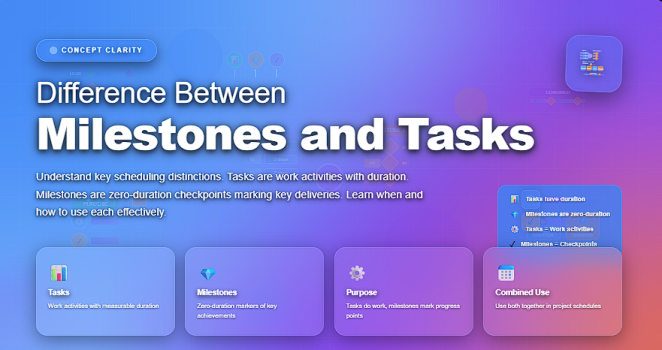
✅ Tasks are used to plan and execute work
✅ Milestones are used to track progress and decisions
Duration
✅ Tasks have duration
✅ Milestones have zero duration
Effort and Resources
✅ Tasks require effort and resources
✅ Milestones require no effort or resources
Role in Scheduling
✅ Tasks define how work flows over time
✅ Milestones highlight key achievements
How Tasks and Milestones Work Together
Tasks and milestones are not alternatives—they are complementary.
In a typical project:
✅ Tasks lead up to milestones
✅ Milestones confirm that a group of tasks is complete
✅ Stakeholders often focus on milestones
✅ Teams focus on tasks
For example:
• Tasks: Design screens, review designs, approve layout
• Milestone: Design phase approved
This structure keeps both execution teams and stakeholders aligned.
Why the Difference Matters
Confusing tasks and milestones causes practical problems.
Common issues include:
✅ Assigning duration to milestones
✅ Tracking milestones as if they were tasks
✅ Overloading schedules with unnecessary detail
✅ Misreporting progress to stakeholders
Clear separation improves:
✅ Schedule accuracy
✅ Reporting clarity
✅ Stakeholder communication
Best Practices for Using Tasks and Milestones
Experienced project managers follow these guidelines:
✅ Use tasks to represent real work
✅ Use milestones to mark major achievements
✅ Place milestones at meaningful decision points
✅ Avoid turning milestones into “zero-day tasks”
✅ Review milestone status during executive updates
When used correctly, milestones simplify communication while tasks drive execution.
Tasks, Milestones, and Progress Tracking
Progress is tracked differently for each.
✅ Task progress is measured by completion percentage or status
✅ Milestone progress is binary: achieved or not achieved
This distinction helps prevent misleading reports and false confidence.
Final Thoughts
Tasks and milestones serve different—but equally important—roles in project management.
✅ Tasks move the project forward
✅ Milestones confirm that progress has been made
Strong project managers use tasks to manage the work and milestones to manage expectations. Understanding the difference allows schedules to remain clear, realistic, and trusted throughout the project lifecycle.