 MElkhateeb
➡️ Introduction
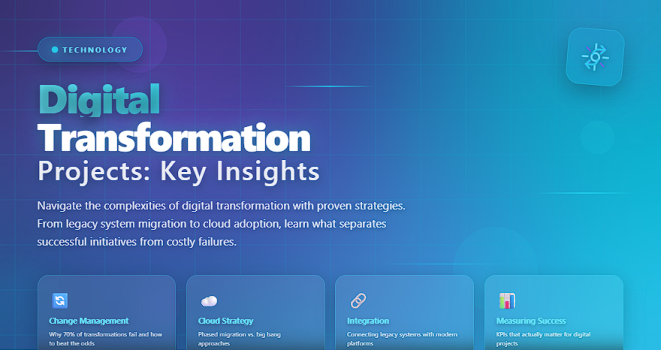
Digital transformation is no longer optional — it is a strategic necessity for organizations that want to stay competitive, improve operations, and deliver modern customer experiences.
However, digital transformation (DX) projects are not traditional IT projects. They are complex, organization-wide initiatives that change how people work, how processes flow, and how technology supports business strategy.
Top 5 Project Management Software
Because of this complexity, digital transformation projects require:
✔️ strong leadership
✔️ clear strategy
✔️ excellent communication
✔️ deep stakeholder involvement
✔️ disciplined project management
In this article, you will learn the core insights, challenges, success factors, and leadership lessons that define successful digital transformation projects.
✅ What Makes Digital Transformation Projects Unique?
Digital transformation projects go beyond system upgrades. They:
✔️ change operating models
✔️ redefine customer journeys
✔️ require cultural and mindset shifts
✔️ impact multiple departments at once
✔️ often involve automation, data, AI, cloud, and modern platforms
✔️ demand strong collaboration between business and IT
Transformation is not about technology alone — it’s about value creation through technology.
✅ Key Insights for Digital Transformation Projects
Core lessons every PM must understand before leading a DX initiative.
| Insight | What It Means | Why It Matters |
|---|---|---|
| Digital Transformation Is Business-Led | Business strategy drives technology choices, not the other way around. | Ensures alignment with revenue goals and customer value. |
| Change Management Is Mandatory | People must adapt to new systems, processes, and behaviors. | Prevents resistance, low adoption, and project failure. |
| Data Is the Core Asset | Modern systems depend on accurate, integrated, high-quality data. | Supports AI, automation, analytics, and better decision-making. |
| Incremental Wins Beat Big-Bang Launches | Deliver transformation in phases, not a massive final rollout. | Reduces risk, improves adoption, and creates momentum. |
| Cross-Functional Collaboration Is Non-Negotiable | IT, operations, marketing, finance, HR, and leadership must work together. | Prevents silos and ensures consistent transformation goals. |
✅ Essential Elements of a Successful Digital Transformation Project
✔️ 1. Clear Vision and Executive Sponsorship
Leaders must define the purpose, scope, and expected value of the transformation.
Without strong sponsorship, DX projects lose direction.
✔️ 2. Strong Change Management Strategy
Transformation impacts habits, workflows, reporting structures, and performance expectations.
A strong change strategy includes:
✔️ communication
✔️ training
✔️ resistance management
✔️ continuous support
✔️ 3. Modern, Scalable Technology
Common technologies include:
✔️ cloud platforms
✔️ automated workflows
✔️ AI and predictive analytics
✔️ CRM/ERP modernization
✔️ low-code/no-code tools
✔️ data integration layers
Technology should support business goals — not complicate them.
✔️ 4. Data Quality and Integration
Digital systems cannot perform well with inconsistent, siloed, or outdated data.
Invest early in:
✔️ data cleansing
✔️ data governance
✔️ integration APIs
✔️ master data management
Your data is the foundation of transformation.
✔️ 5. Customer-Centric Approach
Every digital transformation must improve the customer experience.
Ask:
➡️ How does this change make things faster, easier, or more personalized for users?
✔️ 6. Agile and Iterative Delivery
Use short cycles to test, learn, and adapt:
✔️ quick prototypes
✔️ pilot programs
✔️ early feedback
✔️ fast improvements
This minimizes risk and accelerates results.
✔️ 7. Continuous Measurement and Governance
Track progress using:
✔️ KPIs
✔️ OKRs
✔️ dashboards
✔️ transformation scorecards
Governance ensures alignment with strategic priorities.
❌ Common Challenges in Digital Transformation
Digital transformation projects frequently struggle with:
❌ unclear strategy
❌ employee resistance
❌ lack of training
❌ outdated legacy systems
❌ data inconsistencies
❌ weak governance
❌ underfunding
❌ unrealistic timelines
Awareness of these challenges helps PMs lead confidently.
⭐ Best Practices for Leading Digital Transformation
✔️ start small → scale fast
✔️ involve users early
✔️ communicate frequently
✔️ create quick wins
✔️ align with business KPIs
✔️ integrate data early in the project
✔️ choose flexible, cloud-ready platforms
✔️ support teams during the transition
⭐ Final Thoughts
Digital transformation is ultimately about advancing how organizations operate — not simply adopting technology.
When done right, it accelerates growth, improves efficiency, and strengthens customer relationships.
A project manager who understands strategy, people, data, and technology becomes a key driver of successful transformation.
Technology enables transformation.
People deliver transformation.
Leadership sustains transformation.