 MElkhateeb
➡️ Introduction
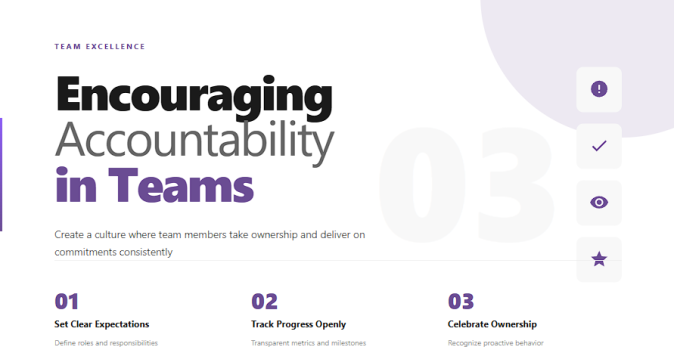
Accountability is one of the strongest predictors of high performance in project teams.
When people take ownership of their work, deadlines are met, issues are raised early, and collaboration flows naturally.
But when accountability is weak, projects suffer from blame-shifting, delays, miscommunication, and poor follow-through.
Top 5 Project Management Software
As a project manager, your goal is to create a culture where accountability is expected, supported, and rewarded — not feared.
✅ What Accountability Really Means
Accountability is not punishment.
It means:
✔️ Owning tasks
✔️ Delivering on commitments
✔️ Communicating risks early
✔️ Taking responsibility for outcomes
✔️ Being answerable for quality and deadlines
Teams with high accountability trust each other more — and rely less on micromanagement.
✅ Effective Accountability Strategies
Clear methods to build ownership and responsibility in project teams.
| Strategy | Why It Works | How to Apply It |
|---|---|---|
| 1. Set Clear Responsibilities | Removes ambiguity and aligns expectations. | Use RACI, role descriptions, and clear ownership for each task. |
| 2. Define Measurable Goals | Creates objective standards for performance. | Use SMART goals for tasks, milestones, and deliverables. |
| 3. Foster Transparent Communication | Builds trust and avoids hidden issues. | Use status meetings, dashboards, and open updates. |
| 4. Encourage Ownership of Decisions | People commit more to decisions they helped make. | Let team members choose approaches and define task methods. |
| 5. Support Autonomy | Prevents micromanagement and boosts motivation. | Give freedom in “how” work is done, while keeping goals fixed. |
| 6. Provide Regular Feedback | Helps people stay aligned and improve continuously. | Give weekly check-ins, constructive notes, and praise. |
| 7. Celebrate Accountability | Reinforces desired behavior across the team. | Recognize people who deliver, communicate risks early, and step up. |
✅ How to Build a Culture of Accountability
✔️ 1. Start With Purpose
Explain why each task matters.
People take ownership when they understand how their work contributes to the project.
✔️ 2. Assign Clear Ownership
One task = one owner.
Shared responsibility often leads to no responsibility.
✔️ 3. Create Visibility
Dashboards, standups, and progress tracking make accountability natural — not forced.
✔️ 4. Normalize Early Risk Reporting
Make it safe for people to say:
“I think I might miss the deadline.”
Instead of hiding issues until it’s too late.
✔️ 5. Reward Accountability
A simple public thank-you can change team behavior.
✔️ 6. Address Gaps Quickly
Don’t wait until performance drops significantly.
✔️ 7. Lead by Example
If you don’t follow through, the team won’t either.
Your behavior sets the standard.
🛠️ Tools That Strengthen Accountability
✔️ Monday.com – Assign clear owners and track progress
✔️ Miro – Collaborative planning and shared decision-making
✔️ Teams / Slack – Fast updates, transparency, and early warnings
✔️ Power BI – Visual dashboards showing performance and deadlines
✔️ Smartsheet – Centralized accountability logs and action trackers
❌ Common Accountability Mistakes to Avoid
❌ Using blame instead of coaching
❌ Setting vague or unrealistic expectations
❌ Micromanaging instead of empowering
❌ Ignoring broken commitments
❌ Having no follow-up process
❌ Rewarding only output, not responsibility
⭐ Final Thoughts
Accountability is not something you demand — it’s something you build.
When you create clarity, trust, open communication, and shared ownership, accountability becomes automatic.
A team that owns its work becomes a team that delivers exceptional results.