 MElkhateeb
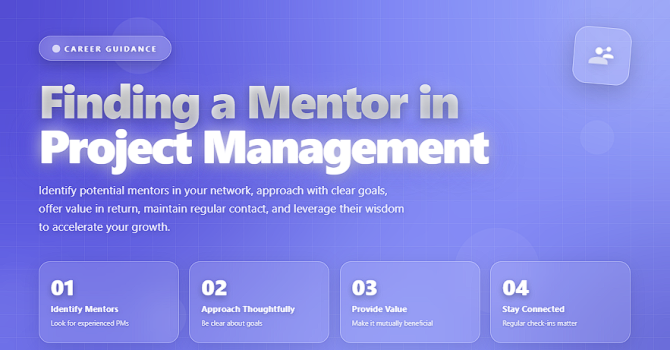
➡️ Introduction
Project management can feel overwhelming — complex stakeholders, shifting requirements, tight deadlines, and the constant pressure to deliver value. While certifications and courses help, nothing accelerates your growth like having a mentor.
Top 5 Project Management Software
A strong mentor offers wisdom, perspective, and real-world experience you can’t learn from textbooks. They help you avoid mistakes, build confidence, sharpen your leadership skills, and unlock opportunities you never knew existed.
This article explains how to find the right mentor, what to look for, and how to build a meaningful, long-term mentoring relationship.
✅ Why a Mentor Matters in Project Management
The PM profession blends technical knowledge with leadership, communication, negotiation, and strategic thinking. Because of that, a mentor can help you:
✔️ Navigate political challenges across teams
✔️ Improve stakeholder communication
✔️ Learn proven frameworks for planning and execution
✔️ Avoid common project pitfalls
✔️ Grow your confidence as a decision-maker
✔️ Understand career advancement paths
✔️ Receive honest feedback from someone who’s been there
A good mentor helps you grow both as a manager and as a leader.
✅ What Makes a Good PM Mentor?
The best project management mentors typically have:
✔️ 10+ years of real-world PM experience
✔️ Diverse project background (agile, waterfall, hybrid)
✔️ Hands-on leadership skills
✔️ Strong communication and teaching abilities
✔️ Willingness to challenge you
✔️ A growth-oriented mindset
✔️ A track record of developing leaders
A mentor is not someone who does your job for you — they guide you to make better decisions on your own.
✅ Where to Find a Project Management Mentor
1️⃣ Inside Your Organization
Most PMOs include senior project managers, program managers, or portfolio leads who enjoy mentoring.
Look for people who:
✔️ are respected by multiple departments
✔️ manage high-visibility initiatives
✔️ communicate clearly and confidently
Ask them for a short call — not a long-term commitment at first.
2️⃣ Professional Networks and Communities
Join PM-focused groups such as:
✔️ PMI Chapters
✔️ LinkedIn PM groups
✔️ Scrum and Agile communities
✔️ Slack/Discord groups for PMs
Engage actively — mentors are drawn to motivated people.
3️⃣ Conferences, Workshops, and Webinars
Senior PMs attend and speak at industry events.
After a session, send a short message:
“Your talk gave me new insight into risk management. Would you be open to a short 15-minute conversation next week?”
Simple. Professional. Effective.
4️⃣ Online Mentorship Platforms
You can find PM mentors on:
✔️ ADPList
✔️ MentorCruise
✔️ GrowthMentor
✔️ Clarity.fm
These platforms allow you to choose mentors based on skill, industry, and experience.
5️⃣ Your LinkedIn Network
Look for:
✔️ directors of project management
✔️ PMO leads
✔️ senior program managers
✔️ people posting valuable PM insights
Send personalized messages — never copy-paste generic requests.
✅ How to Approach a Potential Mentor
Mentors respond positively when you show clarity and respect for their time.
Use this structure:
✔️ Introduce yourself briefly
✔️ State what you admire about their experience
✔️ Explain why you’re seeking guidance
✔️ Request one short meeting (10–15 mins)
Example:
“I admire how you lead large cross-functional programs. I’m growing in my project management career and would value 15 minutes of your time for advice. If it’s a fit, I’d love to explore an ongoing mentorship.”
Always start small — mentors hate vague, open-ended commitments too early.
✅ How to Build a Strong Mentor–Mentee Relationship
✔️ Come prepared
Always bring specific questions or challenges.
✔️ Take notes
Show you value their time and insights.
✔️ Follow through
If they recommend a book or action — complete it.
✔️ Give updates
Mentors love to see your progress.
✔️ Be respectful of their time
Short, focused conversations work best.
✔️ Add value in return
You may help them with:
✔️ research
✔️ industry insights
✔️ feedback on new tools or trends
Mentorship is a two-way partnership.
✅ What to Ask Your PM Mentor
Great questions make great mentorship sessions. Examples:
🔹 “How do you manage difficult stakeholders?”
🔹 “What’s the biggest mistake new PMs make?”
🔹 “How do you prioritize work during chaos?”
🔹 “What skills helped you get promoted?”
🔹 “How do you handle executive communication?”
🔹 “Which metrics matter most on complex projects?”
🔹 “How do you stay calm under pressure?”
These questions open powerful discussions.
✅ Signs You Found the Right Mentor
You know you made the right choice when your mentor:
✔️ challenges your thinking
✔️ gives honest, actionable feedback
✔️ helps you see blind spots
✔️ inspires confidence
✔️ shares real experiences, not theory
✔️ celebrates your progress
✔️ pushes you toward growth
If every conversation leaves you motivated and clearer — you’ve found the right person.
❌ Red Flags to Avoid
Not every mentor is a good one.
🚫 overly negative or discouraging
🚫 unwilling to listen
🚫 constantly too busy
🚫 gives vague or unhelpful advice
🚫 focuses only on their accomplishments
🚫 talks more than they teach
If you see these signs — politely step back and find someone better.
⭐ Final Thoughts
A project management mentor is one of the most valuable assets you can invest in.
They help you grow faster, make better decisions, improve leadership abilities, and build a stronger, more strategic PM mindset.
Great project managers don’t grow alone — they grow through guidance, reflection, and meaningful mentorship.