 MElkhateeb
➡️ Introduction
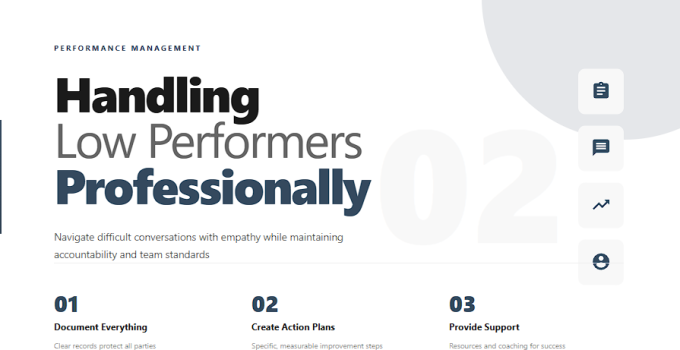
Every project team has different strengths, experiences, and working styles. But occasionally, a team member consistently underperforms — missing deadlines, producing low-quality work, or showing low engagement.
Top 5 Project Management Software
As a project manager, your goal is not to punish low performers, but to diagnose the cause, support improvement, and protect the project’s success without damaging morale or relationships.
Professional handling of low performance demonstrates leadership, fairness, and emotional intelligence.
✅ Why Low Performance Happens
Low performance rarely comes from laziness. Most cases stem from:
✔️ Unclear expectations
✔️ Misaligned roles or strengths
✔️ Lack of training or experience
✔️ Personal or health issues
✔️ Poor communication
✔️ Overload or burnout
✔️ Lack of motivation or recognition
✔️ Conflicts or unhealthy team dynamics
Understanding the root cause is key — because the wrong solution can make things worse.
✅ Professional Techniques for Handling Low Performers
Clear, structured steps to diagnose and support improvement.
| Technique | Why It Works | How to Apply It |
|---|---|---|
| 1. Diagnose the Root Cause | Prevents incorrect solutions and builds fairness. | Ask questions to understand skills, workload, and obstacles. |
| 2. Set Clear, Measurable Expectations | Eliminates ambiguity and defines “good performance.” | Use SMART goals and define exact quality standards. |
| 3. Provide Coaching and Training | Improves capability and confidence. | Offer mentoring, training sessions, shadowing, or tutorials. |
| 4. Reassign Work to Strengths | Boosts productivity by aligning skills with tasks. | Adjust responsibilities to match natural strengths. |
| 5. Create a Performance Improvement Plan | Provides structured recovery and accountability. | Set timelines, milestones, and support checkpoints. |
| 6. Provide Continuous Feedback | Keeps improvement on track and reduces surprises. | Schedule weekly (or biweekly) feedback meetings. |
| 7. Escalate Professionally (When Needed) | Ensures fairness and protects the project. | Involve HR, sponsor, or line manager if no improvement occurs. |
✅ Step-by-Step Approach to Handle Low Performance Professionally
✔️ 1. Start with a Private, Respectful Conversation
Discuss observations — not accusations.
Use neutral language:
“I noticed several deadlines were missed. I’d like to understand what’s happening.”
✔️ 2. Identify Barriers
Is it knowledge?
Is it workload?
Is it unclear priorities?
Is it personal circumstances?
✔️ 3. Agree on Clear Expectations
Define:
- What success looks like
- Quality standards
- Deadlines
- Reporting expectations
✔️ 4. Provide Support
Depending on the issue, support may include:
✔️ Training
✔️ Better tools
✔️ Clarified priorities
✔️ Reduced workload
✔️ Coaching or mentoring
✔️ 5. Create a Short Performance Improvement Plan
A PIP (2–6 weeks) encourages improvement without punishment.
✔️ 6. Monitor Progress and Give Frequent Feedback
Feedback should be immediate, specific, and supportive.
✔️ 7. Document Everything
Keeps the process fair and transparent.
✔️ 8. Escalate If No Improvement Happens
Escalation isn’t punishment — it’s a formal path to protect the team and project.
✅ Tools That Help Manage Low Performance
✔️ Monday.com – Track goals, deadlines, and progress visibility
✔️ Miro – Map issues and collaborate on improvement plans
✔️ Smartsheet – Create dashboards documenting performance
✔️ Teams / Slack – Maintain continuous communication
✔️ Power BI – Visualize workload and bottlenecks
❌ Mistakes to Avoid
❌ Ignoring the problem
❌ Public criticism
❌ Making assumptions instead of asking
❌ Micromanaging
❌ Waiting too long to address performance
❌ Using emotional or judgmental language
✅ Best Practices
✔️ Be fair, calm, and objective
✔️ Start early — don’t wait for a crisis
✔️ Focus on behavior, not personality
✔️ Reward improvement immediately
✔️ Protect team morale throughout the process
✔️ Maintain empathy and respect
⭐ Final Thoughts
Handling low performers professionally is a core leadership skill.
Your role is to diagnose the true cause, offer support, maintain fairness, and protect your team and your project.
Strong leaders lift performance — they don’t punish mistakes.