 MElkhateeb
➡️ Introduction
Even the most capable teams can stumble when communication breaks down.
Communication gaps — misunderstandings, delays, or missing information — lead to confusion, duplicated work, and frustration.
Top 5 Project Management Software
For project managers, closing these gaps isn’t about talking more; it’s about communicating better.
This means creating systems, habits, and tools that ensure everyone stays aligned, informed, and engaged from start to finish.
✅ What Are Communication Gaps?
A communication gap occurs when information is not shared clearly, timely, or accurately between team members.
They often result from:
✔️ Unclear roles or expectations.
✔️ Inconsistent updates or missing context.
✔️ Cultural or language barriers.
✔️ Overreliance on one channel (like email).
✔️ Lack of feedback or documentation.
These gaps can silently erode team efficiency, project quality, and morale.
✅ Why Closing Communication Gaps Matters
✔️ Improves collaboration and trust among team members.
✔️ Reduces rework and misunderstandings.
✔️ Speeds up decision-making.
✔️ Enhances accountability and ownership.
✔️ Strengthens stakeholder relationships.
✅ Common Communication Gaps and How to Fix Them
Identify weak points and apply targeted solutions to improve team alignment.
| Communication Gap | Cause | Solution |
|---|---|---|
| 1. Lack of Role Clarity | Unclear responsibilities or overlapping tasks. | Use a RACI Matrix and review it at project kick-off and major milestones. |
| 2. Infrequent Updates | Teams assume progress is understood without sharing updates. | Implement weekly check-ins or dashboards using Monday.com or Smartsheet. |
| 3. Over-Reliance on Email | Key information buried in long threads. | Use collaborative platforms like Teams, Slack, or Miro for discussions and tracking. |
| 4. Cultural or Language Barriers | Different communication norms and styles across teams. | Adopt visual communication (dashboards, icons, charts) and clarify expectations early. |
| 5. Missing Feedback Loops | No process for receiving and acting on feedback. | Establish recurring feedback sessions and share outcomes transparently. |
| 6. Misaligned Priorities | Different understandings of project goals or deadlines. | Hold alignment meetings and publish visual roadmaps accessible to all team members. |
✅ Steps to Close Communication Gaps
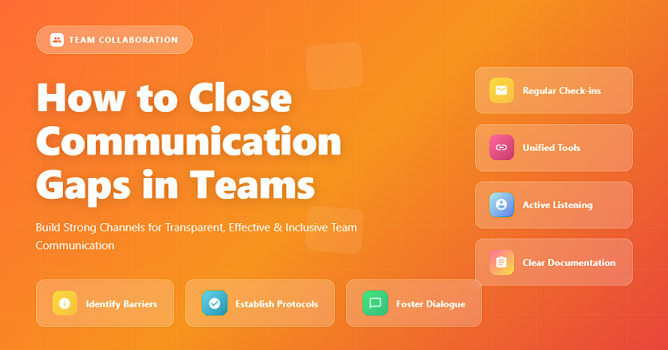
✔️ Step 1 – Diagnose the Gaps: Identify where misunderstandings happen most — between teams, tools, or roles.
✔️ Step 2 – Standardize Communication Channels: Decide which platforms are used for updates, tasks, and decisions.
✔️ Step 3 – Create Shared Visibility: Use dashboards and shared folders to centralize project data.
✔️ Step 4 – Reinforce Feedback Culture: Encourage two-way communication, not one-way reporting.
✔️ Step 5 – Document Everything: Meeting notes, decisions, and action items should always be recorded.
✔️ Step 6 – Train the Team: Offer brief communication workshops or tool training sessions.
✅ Tools That Improve Team Communication
✔️ Monday.com – Centralized workspace for tasks, files, and team updates.
✔️ Miro – Visual collaboration for workflows and brainstorming.
✔️ Microsoft Teams / Slack – Streamlined real-time communication.
✔️ Smartsheet – Combines task management with structured communication.
✔️ Power BI / Google Data Studio – Turns data into shareable visuals.
✅ Common Mistakes to Avoid
❌ Overcommunicating without purpose — too many messages can confuse.
❌ Ignoring tone or clarity in written communication.
❌ Assuming everyone reads all messages.
❌ Relying on informal updates instead of structured reports.
❌ Not checking understanding after giving instructions.
✅ Best Practices
✔️ Use a communication plan to define cadence and methods.
✔️ Keep updates short, visual, and actionable.
✔️ Confirm understanding through follow-ups or summaries.
✔️ Encourage psychological safety so everyone feels comfortable sharing.
✔️ Make communication improvement part of team retrospectives.
✅ Final Thoughts
Communication gaps don’t disappear by chance — they close through structure, consistency, and trust.
When project managers create systems that promote clarity and active listening, teams move from misalignment to momentum.
Great teams don’t just talk — they understand each other.