 MElkhateeb
➡️ Introduction
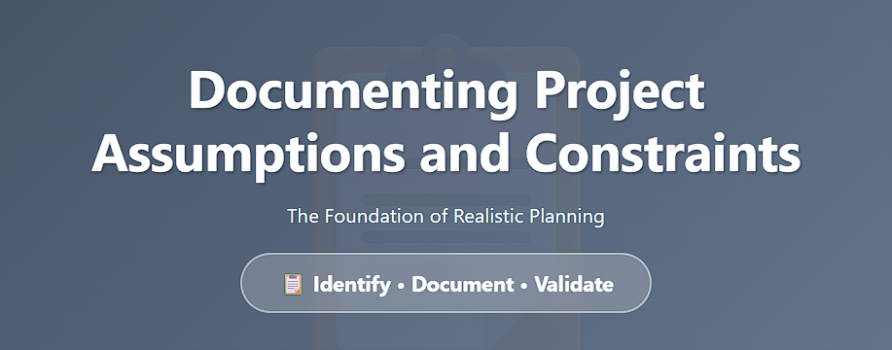
Every project plan rests on a foundation of assumptions and constraints — even if they’re not always documented properly.
Top 5 Project Management Software
Assumptions define what you believe to be true, while constraints define the boundaries you must work within.
Together, they set realistic expectations and help identify potential risks early in the project life cycle.
This article explains how to document project assumptions and constraints, why they matter, and provides a ready-to-use framework in your .ppx responsive table format.
✅ What Are Project Assumptions?
Assumptions are factors that are believed to be true for planning purposes but may not be fully confirmed.
They influence timelines, resource planning, and decision-making.
📘 Examples:
✔️ Key team members will be available throughout the project.
✔️ Vendors will deliver materials on schedule.
✔️ Necessary approvals will be received within one week.
If these assumptions turn out to be wrong, the project could face delays, cost overruns, or quality issues.
✅ What Are Project Constraints?
Constraints are the limitations that restrict your project’s options or flexibility.
They can include time, cost, resources, technology, or scope restrictions.
📘 Examples:
✔️ The project must be completed within 90 days.
✔️ The total budget cannot exceed $150,000.
✔️ The final deliverable must use a specific software platform.
Constraints define the non-negotiable limits that the project team must respect.
✅ Example Framework: Assumptions and Constraints
A structured format for recording, tracking, and validating project assumptions and constraints.
| Category | Description | Impact if False / Violated | Owner |
|---|---|---|---|
| Assumption | All stakeholders will provide feedback within 48 hours of review requests. | Delays in approvals could push deadlines and increase costs. | Project Manager |
| Assumption | Required software licenses will be available before the development phase. | Development may be delayed and require reallocation of resources. | IT Coordinator |
| Constraint | The project must be delivered within a 6-month window. | Failure to meet delivery date could affect client contract renewal. | Project Sponsor |
| Constraint | The budget is capped at $200,000. | Scope reduction or funding escalation may be required. | Finance Manager |
✅ How to Document Assumptions and Constraints
☑️ 1. Identify Early in the Planning Phase
Brainstorm with stakeholders to uncover assumptions about schedules, resources, vendors, or technology.
☑️ 2. Use a Standard Template
Document each assumption or constraint with details such as owner, validation date, and potential risk impact.
☑️ 3. Validate Regularly
Review assumptions periodically — many become invalid as projects evolve.
☑️ 4. Include in Key Documents
Add them to your project charter, risk register, and project management plan for full visibility.
☑️ 5. Monitor and Update
As facts change, update your assumption and constraint log to maintain accuracy throughout the project.
✅ Best Practices
✔️ Keep assumptions realistic and specific.
✔️ Classify assumptions as confirmed or unverified.
✔️ Prioritize constraints by their impact on scope, time, or budget.
✔️ Review them during each major project milestone.
✅ Common Mistakes to Avoid
❌ Ignoring assumptions after the planning phase.
❌ Failing to test whether assumptions remain valid.
❌ Overlooking soft constraints like stakeholder availability.
❌ Treating all constraints as equal when some are flexible.
✅ Final Thoughts
Documenting project assumptions and constraints helps teams plan realistically, anticipate risks, and communicate boundaries clearly.
A well-maintained log ensures that decisions are based on facts, not guesses — and that when things change, the project can adapt intelligently.
Great project managers don’t just plan for what’s known — they prepare for what’s assumed.