 MElkhateeb
➡️ Introduction
Meetings are where projects move forward — or stall completely.
For project managers, running an effective meeting means more than gathering people together. It’s about driving clarity, decisions, and accountability while respecting everyone’s time.
Top 5 Project Management Software
In today’s fast-paced work environment, where hybrid and remote setups dominate, mastering the art of meetings can make or break a project’s momentum.
This guide will help you design and execute meetings that are purposeful, engaging, and result-oriented.
✅ Why Effective Meetings Matter
✔️ Aligns the team on priorities and progress.
✔️ Encourages collaboration and problem-solving.
✔️ Builds trust and communication across teams.
✔️ Reduces misalignment and repetitive work.
✔️ Turns discussions into actionable decisions.
Poorly planned meetings waste time and damage morale — effective ones inspire focus and teamwork.
✅ Types of Project Meetings
✔️ Kick-off Meetings – Introduce the project, define scope, and align stakeholders.
✔️ Status Updates – Track progress, identify blockers, and review deliverables.
✔️ Risk Review Meetings – Assess threats, mitigation plans, and response actions.
✔️ Change Control Meetings – Evaluate scope or budget modifications.
✔️ Retrospectives – Reflect on lessons learned and continuous improvement.
✅ Core Elements of an Effective Meeting
The foundation for focus, clarity, and actionable results in every session.
| Element | Description | Best Practice |
|---|---|---|
| 1. Clear Objective | Every meeting must have a defined purpose and outcome. | Write the goal in one sentence and include it in the invite. |
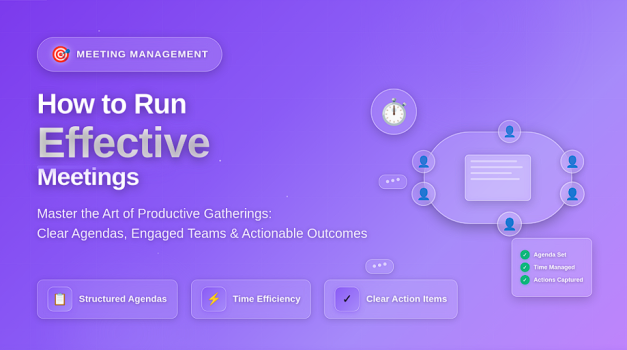
| 2. Structured Agenda | Plan discussion topics, time allocations, and presenters. | Distribute the agenda at least 24 hours before the meeting. |
| 3. Right Participants | Invite only people who add value or make decisions. | Use RACI to identify who is Responsible or Consulted. |
| 4. Time Management | Respect start and end times to maintain focus and trust. | Use a timekeeper or visual timer to stay on track. |
| 5. Action Items | Capture clear decisions, owners, and due dates. | Summarize all actions at the end and send follow-up notes. |
| 6. Follow-Up | Reinforce decisions and next steps after the meeting. | Send a summary email within 24 hours with assigned tasks. |
✅ How to Run an Effective Meeting (Step-by-Step)
✔️ Step 1 – Define the Purpose: Know exactly why the meeting is needed and what outcome is expected.
✔️ Step 2 – Prepare the Agenda: Outline topics, assign time slots, and clarify the decision points.
✔️ Step 3 – Set Ground Rules: Keep discussions respectful, focused, and time-bound.
✔️ Step 4 – Facilitate Actively: Guide the discussion, prevent dominance, and keep participants engaged.
✔️ Step 5 – Capture Decisions: Note every conclusion, responsible person, and due date.
✔️ Step 6 – Close with Clarity: Recap next steps before ending the meeting.
✔️ Step 7 – Follow Up: Send meeting notes and track action item completion.
✅ Tools to Support Productive Meetings
✔️ Miro – Visual collaboration for brainstorming and decision-making.
✔️ Monday.com – Track meeting actions and integrate with project boards.
✔️ Microsoft Teams / Zoom – Reliable virtual communication platforms.
✔️ Google Docs / Notion – Collaborative note-taking and agenda management.
✔️ Loom / Otter.ai – Record or summarize meetings automatically.
✅ Common Meeting Mistakes to Avoid
❌ Having meetings without clear goals.
❌ Allowing discussions to drift off-topic.
❌ Not documenting decisions or next steps.
❌ Inviting too many participants.
❌ Holding meetings that could have been short updates or emails.
✅ Best Practices
✔️ Keep meetings short and purposeful — 30 minutes is often enough.
✔️ Share agendas and materials in advance.
✔️ Use visual aids (dashboards, slides, or Miro boards) to maintain engagement.
✔️ Always end with decisions and owners.
✔️ Continuously collect feedback to improve meeting efficiency.
✅ Final Thoughts
Meetings should be tools for action, not time drains.
By planning ahead, keeping discussions structured, and ensuring accountability, project managers can turn every meeting into a strategic accelerator for progress.
The best meetings don’t just talk about work — they move the work forward.