
 MElkhateeb
➡️ Introduction
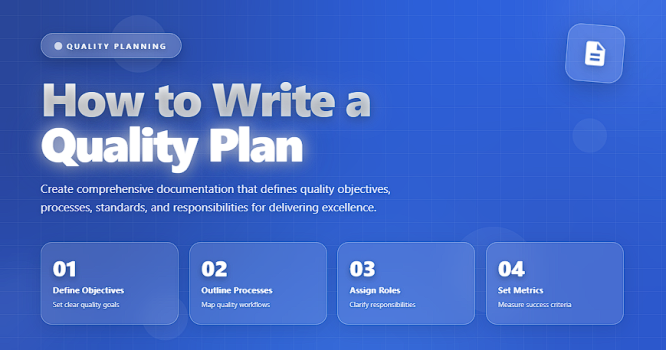
Quality is not an accident — it is the result of intentional planning, clear standards, defined processes, and continuous monitoring.
In project management, a Quality Plan explains exactly how the project team will ensure the final deliverables meet stakeholder expectations, compliance requirements, and performance benchmarks.
Top 5 Project Management Software
A strong quality plan prevents rework, reduces cost overruns, improves customer satisfaction, and protects the integrity of the project.
This guide walks you through what a quality plan is, why it matters, and how to create one step-by-step using globally recognized best practices.
✅ What Is a Quality Plan?
A Quality Plan is a project document that defines:
✔️ What quality means for the project
✔️ Which standards must be met
✔️ What processes will ensure quality
✔️ Who is responsible for quality activities
✔️ How quality performance will be measured
It acts as a roadmap that guides the team throughout the project to ensure consistency, compliance, and excellence.
✅ Why a Quality Plan Matters
A well-prepared quality plan helps project managers:
✔️ avoid defects and rework
✔️ maintain consistency in deliverables
✔️ ensure compliance with internal and external standards
✔️ define clear acceptance criteria
✔️ align stakeholders around expectations
✔️ prevent customer dissatisfaction
✔️ protect the project from cost and schedule overruns
Quality planning is proactive, not reactive.
✅ Key Elements of a Quality Plan
When writing a quality plan, make sure it includes the following components.
✔️ 1. Quality Objectives
Quality objectives define what the project wants to achieve, not how.
Examples:
- Deliver software with <1% critical defects
- Complete construction within regulatory standards
- Produce documentation with zero major inconsistencies
Objectives must be:
➡️ Specific
➡️ Measurable
➡️ Aligned with stakeholder expectations
✔️ 2. Applicable Standards and Compliance Requirements
Identify all standards the project must follow:
- ISO standards (ISO 9001, ISO/IEC 27001)
- Industry regulations
- Company policies
- Client-specified standards
- Technical performance specifications
- Legal or safety guidelines
This section eliminates ambiguity and ensures compliance from day one.
✔️ 3. Quality Metrics and Key Performance Indicators (KPIs)
Metrics turn quality into measurable values.
Examples:
- Defect density
- Cycle time
- Mean Time to Repair (MTTR)
- Accuracy percentage
- Compliance score
- Rework percentage
These metrics allow the team to track performance over time.
✔️ 4. Roles and Responsibilities
Define who is responsible for quality activities, such as:
- Quality Manager
- Project Manager
- Test Lead / QA Lead
- Business Analysts
- Inspectors / Reviewers
- Vendors
Clear ownership avoids gaps and overlaps.
✔️ 5. Quality Assurance (QA) Activities
QA focuses on preventing defects by improving processes.
Examples:
- Process audits
- Review of procedures
- Requirements analysis
- Training sessions
- Peer reviews
- Supplier assessments
QA answers:
“Are we using the right processes to do the job correctly?”
✔️ 6. Quality Control (QC) Activities
QC focuses on detecting defects in deliverables.
Examples:
- Inspections
- Testing (unit, system, integration, UAT)
- Sampling
- Verification checklists
- Measurement and validation
QC answers:
“Does the output meet the required standard?”
✔️ 7. Acceptance Criteria
Define the conditions that must be met before stakeholders sign off on deliverables.
Examples:
- No high-priority bugs
- Approved by regulatory authority
- Meets all functional requirements
- Matches approved specifications
Acceptance criteria prevent disputes and protect the project team.
✔️ 8. Change Management Procedures
Any change in quality standards, scope, or acceptance criteria must follow a structured process:
- Change request submission
- Impact assessment
- Approval from the Change Control Board (CCB)
- Documented updates
This prevents uncontrolled changes that compromise quality.
✔️ 9. Tools, Templates, and Techniques
Clarify the tools used for managing and measuring quality, such as:
- Jira
- Miro
- Monday.com
- TestRail
- Excel/Google Sheets
- Statistical sampling tools
- Automated testing frameworks
This ensures consistency across teams.
✔️ 10. Quality Reporting and Escalation Procedures
Define how quality performance will be communicated:
- Weekly quality summaries
- Defect trend charts
- Monthly audits
- Escalation thresholds
This keeps stakeholders informed and aligned.
⭐ Step-by-Step Guide to Writing a Quality Plan
✔️ Step 1: Understand the Project Scope and Requirements
Review scope documents, stakeholder needs, and contractual obligations.
✔️ Step 2: Identify Quality Expectations
Interview stakeholders and clarify what “quality” really means to them.
✔️ Step 3: Define Metrics and Standards
Translate expectations into measurable indicators and industry standards.
✔️ Step 4: Plan QA and QC Activities
Outline both preventive and corrective processes.
✔️ Step 5: Assign Roles and Responsibilities
Create a RACI-like structure for quality activities.
✔️ Step 6: Establish Reporting and Review Cycles
Define how performance will be monitored, reviewed, and escalated.
✔️ Step 7: Document the Final Quality Plan
Ensure the plan is clear, accessible, and reviewed by all stakeholders.
❌ Common Mistakes to Avoid
❌ Writing vague or broad quality objectives
❌ Ignoring industry standards or compliance requirements
❌ Focusing too much on QC and neglecting QA
❌ Missing clear acceptance criteria
❌ Failing to assign quality responsibilities
❌ Not revising the plan when scope changes
⭐ Best Practices
✔️ Involve all stakeholders early
✔️ Use clear and measurable metrics
✔️ Keep QA and QC balanced
✔️ Update the plan throughout the project lifecycle
✔️ Use visual dashboards for quality monitoring
✔️ Store the plan where the entire team can access it
⭐ Final Thoughts
A quality plan is not a formality — it is a strategic tool that ensures the project delivers consistent, reliable, and high-value outcomes.
When written properly, it prevents costly mistakes, strengthens compliance, and builds trust with stakeholders.
High-quality deliverables are the result of high-quality planning.