
 MElkhateeb
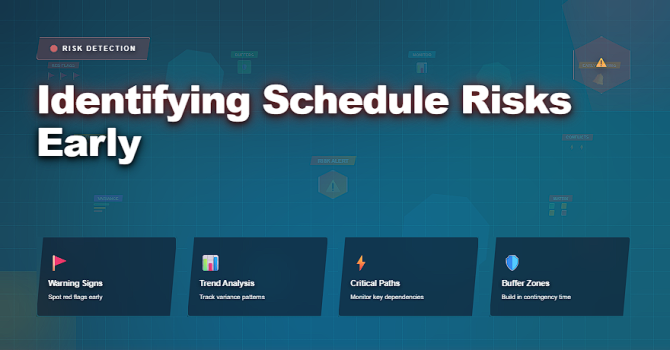
➡️ Introduction
Schedule risks rarely appear overnight.
They build quietly — through small delays, hidden dependencies, overloaded resources, and optimistic assumptions that go unchallenged.
Top 5 Project Management Software
By the time a schedule “slips,” the real damage has often already been done.
Identifying schedule risks early is one of the most valuable skills a project manager can develop. Early detection turns surprises into manageable decisions, protects stakeholder trust, and keeps delivery predictable.
This article explains what schedule risk really is, where it hides, how to spot it early, and what practical actions project managers can take before timelines start to collapse.
✅ What Is Schedule Risk?
Schedule risk is the probability that planned activities will not be completed within their intended timeframes due to uncertainty, constraints, or dependencies.
It can originate from:
✔️ task duration uncertainty
✔️ dependency complexity
✔️ resource availability
✔️ external constraints
✔️ decision delays
✔️ unrealistic assumptions
Schedule risk is not just about late tasks — it’s about fragile plans.
✅ Why Early Identification Matters
When schedule risks are identified early:
✔️ corrective actions are cheaper
✔️ options are still available
✔️ stakeholders stay informed
✔️ teams remain calm and focused
✔️ delivery confidence increases
When risks are discovered late:
❌ choices are limited
❌ pressure escalates
❌ quality is compromised
❌ burnout increases
❌ trust erodes
Early visibility is not pessimism — it is professional discipline.
📌 Common Sources of Schedule Risk
Most schedule risks come from predictable patterns:
✔️ underestimated task durations
✔️ unclear or missing dependencies
✔️ shared resources across projects
✔️ late inputs or approvals
✔️ frequent scope changes
✔️ external vendor dependencies
✔️ unrealistic milestone commitments
Recognizing these sources helps you know where to look first.
📌 Early Warning Signs of Schedule Risk
Schedule risk often appears before any deadline is missed:
✔️ frequent date adjustments
✔️ tasks starting late but “catching up” on paper
✔️ increasing work in progress
✔️ dependencies ignored or bypassed
✔️ key decisions repeatedly postponed
✔️ buffers quietly consumed
✔️ high performers becoming overloaded
These signals indicate that the schedule is absorbing stress — and may soon fail.
✅ Early Schedule Risk Identification Framework
How to detect timeline threats before deadlines are missed.
| Area | What to Review | Risk Signal |
|---|---|---|
| Task Durations | Compare planned vs actual effort | Tasks consistently exceed estimates |
| Dependencies | Check if successor tasks start early | Dependencies ignored or overridden |
| Resource Load | Track assignments per person | Key resources overloaded |
| Milestones | Assess buffer consumption | Buffers shrinking too early |
| Decision Flow | Approval and review timing | Decisions repeatedly delayed |
| Change Frequency | Scope or priority changes | Frequent re-planning |
❌ Common Mistakes That Hide Schedule Risk
❌ relying only on due dates
❌ ignoring early warning signs
❌ assuming teams will “catch up”
❌ tracking tasks instead of flow
❌ reviewing schedules only after delays
❌ treating buffers as optional
These behaviors delay recognition and reduce response options.
⭐ Best Practices for Early Detection
✔️ review schedule health weekly
✔️ track trends, not snapshots
✔️ monitor dependency behavior
✔️ visualize workload regularly
✔️ protect buffers deliberately
✔️ encourage honest status reporting
Early detection depends more on discipline than on tools.
⭐ Final Thoughts
Identifying schedule risks early is not about being overly cautious —
it is about respecting uncertainty.
Strong project managers understand that schedules are forecasts, not promises.
They continuously test those forecasts against reality and adjust before problems become crises.
Projects stay on track not because risks disappear —
but because they are seen early, discussed openly, and managed deliberately.