 MElkhateeb
➡️ Introduction
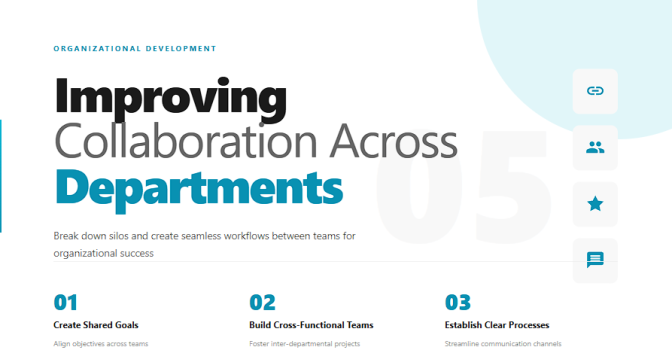
Cross-department collaboration is essential for successful projects — especially in modern organizations where work flows across product, engineering, marketing, operations, HR, finance, and customer teams.
Top 5 Project Management Software
But collaboration is often challenging.
Different goals, priorities, workflows, and communication styles can create friction and slow down progress.
A project manager’s role is to break silos, align teams around shared outcomes, and create systems that support smooth coordination.
This article explains how.
✅ Why Cross-Department Collaboration Is Difficult
Collaboration breaks down due to:
✔️ Conflicting priorities
✔️ Lack of shared goals
✔️ Poor communication channels
✔️ Different terminology or workflows
✔️ Undefined ownership between departments
✔️ Slow decision-making
✔️ Resource constraints
✔️ Departmental silos and “us vs. them” culture
These challenges are normal — but they must be managed deliberately.
✅ Cross-Functional Collaboration Strategies
Practical techniques that improve alignment, teamwork, and shared success.
| Strategy | Why It Works | How to Apply It |
|---|---|---|
| 1. Align on Shared Goals | Prevents competing priorities between departments. | Start projects with common objectives, metrics, and success definitions. |
| 2. Define Roles & Ownership | Reduces confusion and overlap. | Use RACI or clear responsibility charts for all interdepartmental tasks. |
| 3. Establish Communication Channels | Keeps information flowing smoothly. | Create shared Slack channels, Teams groups, or email lists. |
| 4. Hold Regular Cross-Functional Meetings | Ensures alignment, transparency, and faster decisions. | Run weekly or bi-weekly touchpoints with clear agendas. |
| 5. Use Shared Tools | Provides a single source of truth. | Adopt tools like Miro, Monday, Smartsheet, or Jira with shared visibility. |
| 6. Encourage Relationship Building | Reduces friction and fosters collaboration. | Use informal meetups, cross-team workshops, and joint planning sessions. |
| 7. Standardize Workflows | Prevents delays caused by incompatible processes. | Create shared workflows for approvals, handovers, and reporting. |
✅ How to Strengthen Collaboration Across Departments
✔️ 1. Start With Shared Outcomes
Begin every cross-department project with:
- one vision
- one set of business goals
- one definition of “done”
This prevents siloed decision-making.
✔️ 2. Clarify Ownership Early
Every cross-functional task must have a single owner — not a department.
Avoid:
❌ “Marketing and Product are responsible.”
Use:
✔️ “Sarah owns delivery; Ahmed supports with data.”
✔️ 3. Use One Source of Truth
When each department tracks work differently, collaboration fails.
Use:
✔️ one project plan
✔️ one dashboard
✔️ one document repository
✔️ 4. Build Relationships, Not Just Workflow
People collaborate better when they know each other.
Encourage:
✔️ cross-team workshops
✔️ virtual coffees
✔️ problem-solving sessions
✔️ informal introductions
Human connection reduces conflict dramatically.
✔️ 5. Improve Transparency
Transparency builds trust.
Share:
✔️ priorities
✔️ risks
✔️ deadlines
✔️ workload
✔️ constraints
This helps departments support each other better.
✔️ 6. Establish Cross-Department Rituals
Examples:
✔️ weekly alignment calls
✔️ bi-weekly risk reviews
✔️ monthly planning sessions
✔️ shared reporting dashboards
Consistency boosts collaboration.
✔️ 7. Resolve Conflicts Quickly
Misalignment grows if ignored.
Address issues early by facilitating structured discussion between departments.
🛠️ Tools That Improve Cross-Department Collaboration
✔️ Monday.com — Central source of truth for tasks, owners, and timelines
✔️ Miro — Workshops, brainstorming, systems mapping
✔️ Teams / Slack — Fast communication and shared channels
✔️ Smartsheet — Cross-department dashboards and workflow automation
✔️ Power BI — Shared analytics & transparency
❌ Common Cross-Department Mistakes to Avoid
❌ Working in silos
❌ Assuming other teams know your priorities
❌ No shared project plan
❌ Unclear ownership
❌ Delayed communication
❌ Escalating too late
❌ Misaligned expectations
⭐ Best Practices
✔️ Build clarity before starting work
✔️ Create systems for communication
✔️ Focus on transparency and shared data
✔️ Solve conflicts early
✔️ Encourage relationship building
✔️ Celebrate cross-functional wins
⭐ Final Thoughts
Cross-department collaboration is not a one-time task — it’s a culture.
When teams understand each other, share goals, and communicate openly, projects run smoother, risks decrease, and innovation increases.
Great project managers do not manage tasks — they connect people.