 MElkhateeb
➡️ Introduction
Construction projects rarely fail suddenly.
They fall behind gradually — and predictably.
Top 5 Project Management Software
Delays often begin with small planning gaps, weak coordination, or optimistic assumptions that go unchallenged. By the time the delay is visible to everyone, recovery options are limited, expensive, and disruptive.
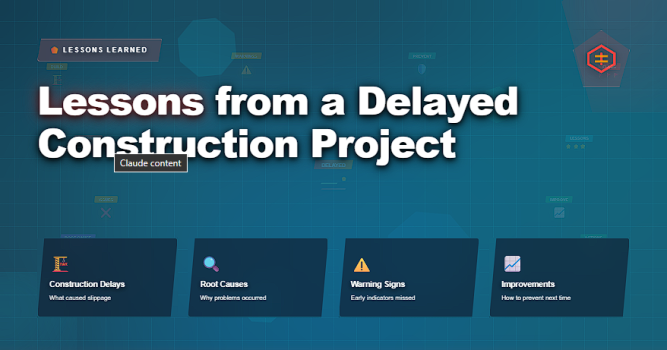
This case study examines a delayed construction project and extracts practical lessons for project managers, planners, and site leaders.
The goal is not to assign blame — but to understand what went wrong, why it happened, and what should have been done differently.
✅ Project Background
The project involved the construction of a commercial office building with a planned duration of 18 months.
Key characteristics:
✔️ fixed handover date tied to tenant commitments
✔️ multiple subcontractors working in parallel
✔️ long-lead materials and specialist trades
✔️ strict regulatory inspections and approvals
Despite a detailed initial schedule, the project finished four months late.
✅ Early Warning Signs That Were Missed
In hindsight, several signals appeared early — but were not acted upon decisively:
✔️ repeated minor slippage in early foundation works
✔️ subcontractor sequencing conflicts
✔️ late design clarifications
✔️ optimistic progress reporting
✔️ increasing site congestion
Each issue alone seemed manageable.
Together, they created systemic delay.
✅ Root Causes of the Project Delay
What actually drove the schedule overrun.
| Cause | What Happened | Impact |
|---|---|---|
| Weak Dependency Planning | Trades scheduled without confirmed handoffs | Idle time and rework |
| Over-Optimistic Durations | Best-case estimates used as baseline | No recovery buffer |
| Late Design Changes | Clarifications issued after work started | Demolition and resequencing |
| Poor Progress Tracking | Status reports focused on activity, not outcomes | Delays detected too late |
| Delayed Escalation | Issues absorbed at site level too long | Limited recovery options |
✅ What the Project Team Tried to Do
As pressure increased, the team attempted recovery through:
✔️ parallel work where sequencing was required
✔️ increased overtime
✔️ adding subcontractors late
✔️ compressing inspections
✔️ informal schedule adjustments
These actions increased cost and complexity — without restoring control.
⭐ Key Lessons from the Delay
✔️ Early slippage is a warning, not noise
✔️ Dependencies must be confirmed, not assumed
✔️ Progress should measure completion, not effort
✔️ Escalation protects options — delay removes them
✔️ Recovery actions must address root causes
Construction schedules fail slowly — then suddenly.
⭐ What Should Have Been Done Differently
A better approach would have included:
✔️ dependency mapping before mobilization
✔️ realistic durations with buffers
✔️ strict change control on design inputs
✔️ milestone-based progress tracking
✔️ early escalation of systemic issues
✔️ regular re-forecasting
Planning discipline is cheaper than recovery.
⭐ Final Thoughts
This delayed construction project did not fail because of a lack of effort.
It failed because planning signals were ignored and control was delayed.
Strong construction project managers do not rely on pressure, overtime, or optimism.
They rely on visibility, discipline, and timely decisions.
Projects succeed not because delays never happen —
but because early warnings are taken seriously and acted upon.