 MElkhateeb
➡️ Introduction
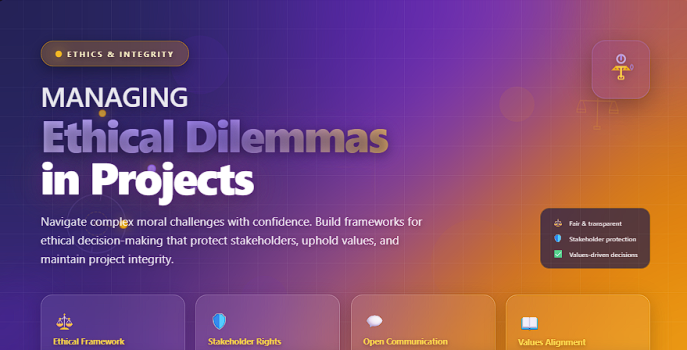
Ethical dilemmas are some of the most difficult challenges project managers face. Unlike schedule delays or budget overruns, ethical issues involve values, integrity, accountability, transparency, and fairness—areas where a single wrong decision can damage stakeholder trust, harm people, or even end a career.
Top 5 Project Management Software
Modern projects operate in diverse environments: global teams, sensitive data, regulatory requirements, cultural differences, and high stakeholder pressure. As a result, project managers must be prepared to recognize ethical risks early and respond with clarity, courage, and professionalism.
This article explains:
✔️ what ethical dilemmas look like in real project environments
✔️ how to recognize early warning signs
✔️ how to apply ethical frameworks to make good decisions
✔️ how to communicate when ethical situations arise
✔️ best practices for maintaining integrity in high-pressure projects
✅ What Are Ethical Dilemmas in Project Management?
An ethical dilemma occurs when a project manager must choose between two conflicting values, responsibilities, or expectations—where no option feels fully right, and each has potential negative consequences.
Examples include:
- being pressured to hide bad news
- choosing between transparency and protecting team morale
- deciding whether to accept incomplete work to meet a deadline
- questioning whether vendor selection was fair
- balancing confidentiality with stakeholder demands
- addressing conflicts of interest
- responding to inappropriate requests from executives
These dilemmas require judgment, not just technical skills.
Common Ethical Dilemmas in Projects
Key scenarios where project managers must rely on judgment, integrity, and transparency.
| Dilemma | Description | Key Risk |
|---|---|---|
| Pressure to Hide Problems | Being asked to delay reporting delays, cost overruns, or quality issues. | Loss of trust, poor decisions, major failure later. |
| Unfair Vendor Selection | Favoring a vendor without objective evaluation. | Legal exposure, reputational damage. |
| Weak Quality Approval | Approving incomplete or low-quality work to meet deadlines. | Customer dissatisfaction, rework, failures. |
| Conflicts of Interest | Personal relationships influencing decisions. | Perceived bias and loss of credibility. |
| Misuse of Confidential Information | Sharing internal or sensitive data with unauthorized people. | Legal penalties, reputational loss. |
✅ Recognizing Early Warning Signs of Ethical Risks
Ethical issues rarely appear suddenly — they build over time. Watch for signs like:
✔️ stakeholders avoiding documentation
✔️ repeated requests to “just trust us”
✔️ pressure to skip approvals or cut corners
✔️ lack of transparency in financial decisions
✔️ uncomfortable or confidential conversations
✔️ decisions that benefit individuals over the project
Your ability to detect early patterns determines how effectively you can respond.
✅ How to Make Ethical Decisions Using a Clear Framework
When facing a dilemma, use the following decision model:
✔️ Step 1 — Identify the Ethical Issue
What values are in conflict?
What makes the situation wrong or unclear?
✔️ Step 2 — Gather Facts
Avoid assumptions. Ask:
- What evidence do I have?
- What information is missing?
- Who is affected?
✔️ Step 3 — Consider Stakeholders
Ethical decisions affect:
✔️ the team
✔️ customers
✔️ executives
✔️ vendors
✔️ regulators
✔️ the public
Always evaluate impact holistically.
✔️ Step 4 — Evaluate Options
Ask yourself:
- Which option most protects long-term trust?
- Which aligns with organizational values?
- Which minimizes harm and maximizes fairness?
✔️ Step 5 — Make a Transparent Decision
Document your reasoning and communicate clearly.
✔️ Step 6 — Reflect and Improve
Every ethical decision improves your leadership maturity.
✅ How to Communicate Effectively During Ethical Situations
Ethical dilemmas require strategic communication.
Use this approach:
✔️ Be honest without being emotional
✔️ Focus on facts, not accusations
✔️ Communicate early—don’t wait for crises
✔️ Use documentation to support your message
✔️ Escalate respectfully when needed
✔️ Protect confidentiality at all times
The goal is not to win an argument, but to guide the project back to integrity and stability.
✅ Preventing Ethical Problems Before They Happen
You can avoid many dilemmas by building a system of integrity:
✔️ clear roles & responsibilities
✔️ strong documentation standards
✔️ transparent procurement processes
✔️ accountability through audits
✔️ independent quality reviews
✔️ reporting channels for concerns
✔️ an ethical code shared with the entire team
An ethical culture is the best long-term risk prevention tool.
⭐ Final Thoughts
Ethical dilemmas will always exist in project environments. What defines great project managers is not avoiding these situations, but how they respond.
By applying structured thinking, transparent communication, and consistent values, PMs safeguard their teams, organizations, and their own professional credibility.
Ethical leadership is not about choosing the easy path —
it’s about choosing the right path, even when it’s hard.