 MElkhateeb
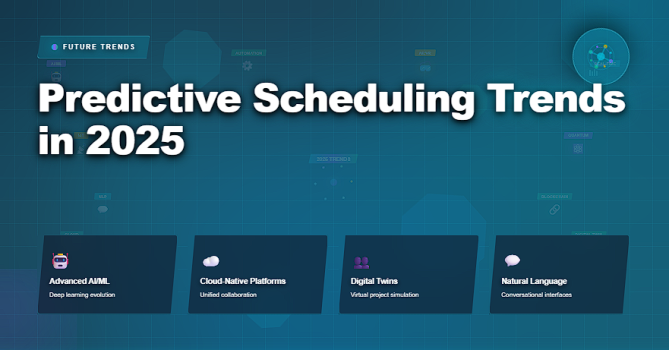
➡️ Introduction
As we enter 2025, the way organizations plan and schedule work is shifting from reactive timing to proactive foresight. What was once manual, static task sequencing is increasingly replaced by automation, predictive insights, and real-time responsiveness. This evolution isn’t driven by tool novelty — it’s driven by necessity.
Top 5 Project Management Software
Projects are bigger, more interdependent, and more volatile than ever. Predictive scheduling helps teams anticipate delays, optimize workloads, and avoid bottlenecks before they happen, making planning a strategic tool instead of an administrative burden.
This article outlines the key predictive scheduling trends shaping 2025 and beyond — so project leaders can adapt, adopt, and lead with confidence.
✅ Why Predictive Scheduling Matters in 2025
Predictive scheduling shifts the focus from “when should this task finish?”
to “what is most likely to happen — and how do we prepare?”
In 2025, organizations leverage historical data, real-time signals, machine learning, and automation to make planning not just more efficient — but more accurate and resilient. These trends reflect broader movements in project management toward AI-augmented planning, automated workflows, and proactive risk mitigation.
📈 Predictive Scheduling Trends in 2025
How planning is evolving with data, AI, and automation.
| Trend | What It Is | Why It Matters |
|---|---|---|
| AI-Driven Predictive Analytics | Machine learning forecasts risks, delays, and resource needs. | Teams can anticipate issues before they derail timelines. |
| Automated Workflow Optimization | AI automates task sequencing, conflict resolution, and adjustments. | Reduces manual re-planning work and human error. |
| Real-Time Data Integration | Schedules update with live status, availability, and performance data. | Plans reflect reality, not outdated assumptions. |
| Scenario Forecasting and What-Ifs | Systems generate alternate schedules based on likely futures. | Decision makers can choose the best recovery path proactively. |
| Hyper-Personalized Resource Scheduling | Adaptive plans that adjust for skills, preferences, and behavior. | Improves utilization and reduces bottlenecks. |
✅ AI and Predictive Scheduling
AI is not just a buzzword — it has become a core driver of predictive scheduling in 2025. AI embeds deep learning, historical patterns, and real-time signals into planning tools, enabling functions such as:
✔️ intelligent task clustering and sequencing
✔️ forecasted workload demands
✔️ early warning of schedule risk and conflict
✔️ automated recommendations and optimizations
This means planning teams can focus more on decision quality and less on manual updates.
❌ Common Pitfalls to Avoid
As predictive scheduling becomes widespread, teams must be careful not to:
❌ treat automation as a “set-and-forget” solution
❌ ignore data quality and governance
❌ over-rely on tool suggestions without human review
❌ skip stakeholder communication despite automated alerts
Technology enhances planning — it does not replace judgement.
⭐ Practical Ways to Apply Predictive Scheduling Trends
✔️ integrate real-time project data (status, hours, risks)
✔️ adopt tools with built-in predictive analytics
✔️ run scenario forecasting before milestone commitments
✔️ combine AI suggestions with expert review
✔️ use predictive insights for resource planning and risk control
These actions help teams stay ahead of change, rather than chase it.
⭐ Final Thoughts
Predictive scheduling in 2025 is about anticipation, not reaction. It blends data, automation, and human expertise to create plans that are not just accurate — but adaptive and resilient.
Smart planning in 2025 means knowing not just when work should happen, but what is likely to happen next — and being prepared for it. With predictive scheduling, organizations can turn uncertainty into an opportunity for control and competitive advantage.