 MElkhateeb
➡️ Introduction
Most project issues are not caused by poor execution.
They are caused by poor time coordination.
Top 5 Project Management Software
Teams often know what they need to do, but not when work actually happens, overlaps, or conflicts. Meetings, milestones, reviews, and delivery dates exist in different places — creating confusion and missed commitments.
A project calendar solves this problem.
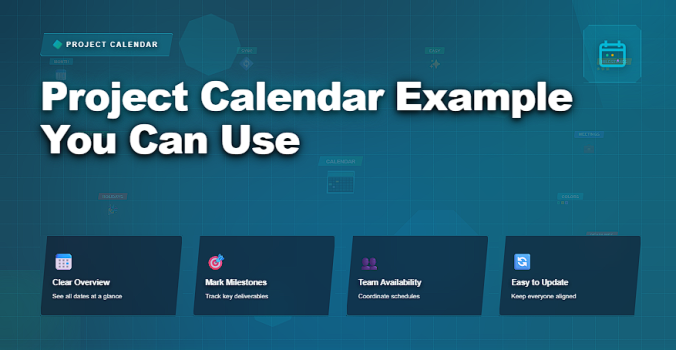
Unlike a schedule or task list, a project calendar provides a time-based coordination layer that aligns people, events, and delivery points in one shared view.
This article presents a clear project calendar example you can use, explains its structure, and shows how it supports better planning and execution.
✅ What a Project Calendar Really Is
A project calendar is not a task breakdown.
It is a structured view of:
✔️ key project dates
✔️ milestones and deadlines
✔️ recurring meetings
✔️ reviews and approvals
✔️ non-working days and constraints
Its purpose is coordination — not control.
✅ Why Every Project Needs a Calendar
Without a project calendar:
✔️ meetings conflict with delivery work
✔️ deadlines arrive without preparation
✔️ milestones are forgotten until late
✔️ stakeholders lose visibility
✔️ teams operate reactively
A calendar creates shared time awareness across the project.
✅ Sample Project Calendar Structure
A simple, reusable calendar layout for real projects.
| Calendar Item | Description | Why It’s Important |
|---|---|---|
| Project Start Date | Formal kickoff of project activities | Sets the planning baseline |
| Milestones | Key delivery or approval points | Tracks progress meaningfully |
| Recurring Meetings | Status reviews, stand-ups, syncs | Maintains alignment and rhythm |
| Review & Approval Dates | Planned review windows | Prevents last-minute delays |
| Non-Working Days | Holidays, shutdowns, planned leave | Ensures realistic timelines |
| Final Delivery Date | Target completion point | Aligns expectations |
✅ How to Use This Project Calendar in Practice
To get real value from a project calendar:
✔️ build it at project kickoff
✔️ share it with the full team
✔️ align meetings with delivery phases
✔️ update it when plans change
✔️ review it in status meetings
✔️ keep it simple and visible
A calendar should support execution — not become another document to maintain.
❌ Common Mistakes with Project Calendars
❌ treating the calendar as a schedule replacement
❌ ignoring non-working days
❌ overloading the calendar with task detail
❌ failing to update after changes
❌ keeping the calendar private
Visibility is the calendar’s strength.
⭐ Best Practices
✔️ maintain one master project calendar
✔️ align it with the project timeline
✔️ integrate it with team calendars when possible
✔️ highlight milestones clearly
✔️ review upcoming dates weekly
✔️ adjust early when conflicts appear
⭐ Final Thoughts
A project calendar is a coordination tool, not a planning luxury.
When used correctly, it helps teams stay aligned, reduces surprises, and keeps delivery predictable — even as plans evolve.
Projects succeed not because calendars are detailed —
but because time is visible, shared, and respected.