 MElkhateeb
➡️ Introduction
Quality is one of the most critical dimensions of successful project delivery. Whether you’re building software, constructing a building, launching a product, or delivering a business transformation, quality determines user satisfaction, operational efficiency, and long-term sustainability.
Top 5 Project Management Software
Yet many teams confuse two foundational concepts:
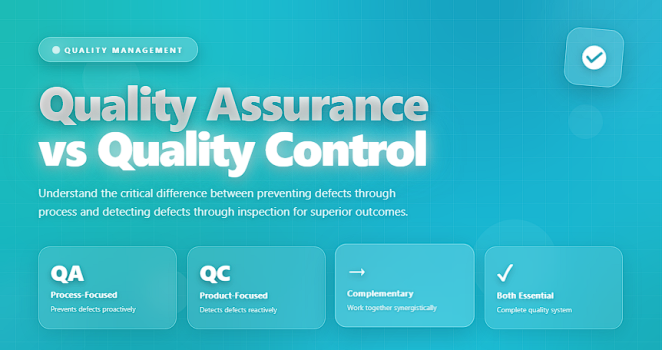
Quality Assurance (QA) and Quality Control (QC).
Although both aim to protect quality, they focus on different stages, actions, and objectives.
Understanding the difference helps project managers design better processes, prevent defects early, and ensure deliverables meet required standards.
This article explains QA vs QC, provides real examples, and includes a fully responsive comparison table you can embed directly into your website.
✅ What Is Quality Assurance (QA)?
Quality Assurance refers to proactive, process-focused activities designed to ensure the project’s methods, workflows, and systems will produce high-quality results.
QA is preventive — it stops defects before they happen.
✔️ Characteristics of QA
- Focuses on processes, not outcomes
- Involves planning, standards, and audits
- Ensures the team follows best practices
- Builds quality into the workflow
- Occurs throughout the project lifecycle
✔️ Examples of QA
- Creating coding guidelines
- Running process audits
- Building checklists
- Performing design reviews
- Establishing testing standards
- Conducting team training
✅ What Is Quality Control (QC)?
Quality Control focuses on detecting defects in the actual deliverables.
It is reactive — it verifies the output after it is created.
QC ensures that the final product meets the required quality standards and client expectations.
✔️ Characteristics of QC
- Focuses on deliverables and outcomes
- Involves inspections, tests, validations
- Detects errors so they can be corrected
- Occurs after an output is produced
✔️ Examples of QC
- Software testing (unit, system, regression)
- Product inspection
- Review of reports and documents
- User acceptance testing (UAT)
- Measuring performance metrics
✅ Quality Assurance vs Quality Control
Key differences between preventive and detective quality disciplines.
| Aspect | Quality Assurance (QA) | Quality Control (QC) |
|---|---|---|
| Primary Focus | Processes & systems | Deliverables & outputs |
| Nature | Preventive | Detective |
| Goal | Avoid defects before production | Identify defects after production |
| Timing | Before work is executed | After work is completed |
| Examples | Audits, training, checklists | Testing, inspections, verification |
| Responsibility | Project team & process owners | Testers, inspectors, validators |
✅ How QA and QC Work Together
Although QA and QC are different, they complement each other:
✔️ QA ensures the right processes are in place
→ Standardized workflows
→ Clear procedures
→ Proper documentation
→ Skilled team members
✔️ QC ensures the final deliverables meet expectations
→ Tested functionality
→ Verified compliance
→ Measured performance
→ Accepted outputs
Together, they create a complete quality management system that prevents, detects, and corrects defects.
✅ Real-World Example (Simple & Clear)
🎯 Software Development
- QA sets coding standards, defines testing protocols, trains developers, and performs code reviews.
- QC runs functional tests, regression tests, bug reports, and UAT before release.
🎯 Construction
- QA establishes safety procedures, material guidelines, and workflow standards.
- QC inspects concrete strength, verifies measurements, and checks compliance on-site.
🎯 Manufacturing
- QA creates SOPs and calibrates machines.
- QC inspects finished parts for defects or deviations.
❌ Common Mistakes Teams Make
❌ Thinking QA and QC are the same
❌ Relying only on QC (too late!)
❌ Not documenting QA processes
❌ Performing QC without standards
❌ Treating quality as a one-time task
Quality is NOT a final step — it’s a continuous discipline.
⭐ Best Practices for Project Managers
✔️ Implement QA early in the project
✔️ Use QC consistently before delivering outputs
✔️ Document your quality procedures
✔️ Define acceptance criteria for all deliverables
✔️ Train your team on standards
✔️ Track quality metrics over time
✔️ Use both QA and QC during every phase
⭐ Final Thoughts
Quality Assurance and Quality Control work hand-in-hand to ensure your project delivers reliable, defect-free results.
QA prevents, QC detects, and together they create a system that guarantees excellence.
“Poor quality is expensive —
preventing it is always cheaper than fixing it.”