 MElkhateeb
➡️ Introduction
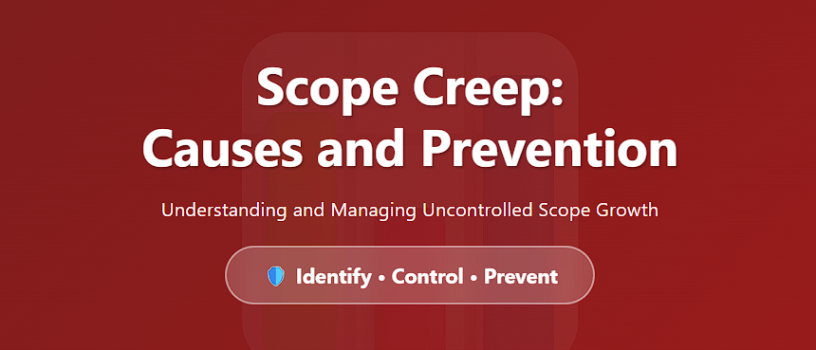
Every project starts with the best intentions — a clear plan, a defined scope, and a realistic timeline. But as work progresses, small “just one more thing” requests begin to appear.
Over time, these small changes accumulate into something much bigger — scope creep.
Top 5 Project Management Software
Scope creep happens when new features, tasks, or deliverables are added without proper evaluation or approval, leading to cost overruns, missed deadlines, and frustrated teams.
This article explains what causes scope creep, how it impacts project outcomes, and what project managers can do to prevent it.
✅ What Is Scope Creep?
Scope creep is the uncontrolled expansion of project scope without adjustments to time, cost, or resources.
It’s often the result of poor change control or unclear scope definitions.
Even well-managed teams are vulnerable if expectations aren’t continuously managed.
Common indicators of scope creep include:
✔️ Stakeholders requesting additional features “just before launch.”
✔️ The project timeline extending repeatedly.
✔️ The budget rising without corresponding scope approvals.
✅ Common Causes of Scope Creep
Primary reasons why projects expand beyond their original boundaries.
| Cause | Description | Example |
|---|---|---|
| Unclear Project Scope | Vague or incomplete scope documentation invites misunderstandings. | “Improve website performance” without measurable targets. |
| Lack of Change Control | Changes are made informally without proper approval. | A client adds new features mid-project through an email request. |
| Poor Stakeholder Communication | Stakeholders are not aligned or informed regularly. | Different departments make conflicting requests without coordination. |
| Underestimating Requirements | Initial project analysis fails to capture the full scope of work. | Development team realizes new APIs are needed late in the process. |
| Weak Project Governance | No formal review board or approval process to manage changes. | Project manager implements stakeholder requests without sponsor validation. |
✅ How to Prevent Scope Creep
☑️ 1. Define Scope Clearly from the Start
Use a detailed Scope Statement that includes deliverables, exclusions, constraints, and acceptance criteria.
☑️ 2. Implement a Change Control Process
Require all change requests to go through formal review and approval — including impact on cost, time, and quality.
☑️ 3. Communicate Constantly
Hold regular meetings with sponsors and stakeholders to confirm expectations haven’t shifted.
☑️ 4. Document Everything
Keep written records of approvals, meeting notes, and agreed-upon changes.
☑️ 5. Manage Stakeholder Expectations
Educate stakeholders about the relationship between changes, timelines, and costs.
☑️ 6. Use Project Management Software
Tools like Monday.com, ClickUp, or Miro help visualize scope, track changes, and maintain accountability.
✅ Signs That Scope Creep Is Happening
✔️ Deadlines repeatedly pushed back.
✔️ Budget requests increasing without formal approval.
✔️ Team members working on unplanned features.
✔️ Deliverables expanding beyond what was signed off.
When these signals appear, it’s time to revisit the scope baseline and restore control.
✅ Final Thoughts
Scope creep doesn’t happen overnight — it grows quietly with every unapproved change.
Preventing it requires clarity, discipline, and communication.
When teams document their scope, manage changes formally, and set firm boundaries, they protect their time, budget, and credibility.
A clear scope isn’t restrictive — it’s protective.
It keeps projects focused, predictable, and successful.