 MElkhateeb
➡️ Introduction
Teams do not become effective overnight.
They develop through predictable stages — whether leaders recognize them or not.
Top 5 Project Management Software
Many project managers expect instant alignment and performance as soon as a team is formed. When conflict appears or productivity drops, it is often treated as a problem. In reality, these behaviors are normal stages of team development, not failures.
The Tuckman Model explains how teams evolve over time, why certain challenges appear at each stage, and how leaders can guide teams toward sustained performance.
This article explains the five stages of team development, what to expect in each stage, and how leaders can support teams effectively as they grow.
✅ What the Tuckman Model Really Explains
The Tuckman Model describes how teams behave as they mature, not how individuals perform.
It helps leaders understand:
✔️ why conflict appears after early enthusiasm
✔️ why productivity fluctuates
✔️ why leadership style must change over time
✔️ how teams eventually reach high performance
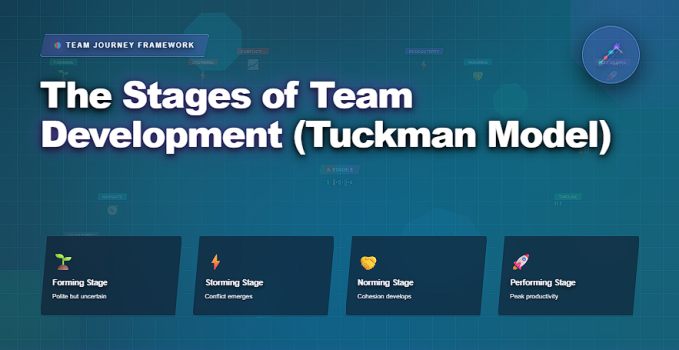
The model includes five stages:
Forming, Storming, Norming, Performing, and Adjourning.
✅ The Five Stages of Team Development
Understanding how teams evolve over time.
| Stage | Typical Team Behavior | Leadership Focus |
|---|---|---|
| Forming | Polite, cautious, seeking clarity | Set goals, roles, and expectations |
| Storming | Conflict, tension, differing opinions | Address conflict and reinforce purpose |
| Norming | Improved collaboration and trust | Support standards and shared practices |
| Performing | High productivity and autonomy | Empower and remove obstacles |
| Adjourning | Closure, reflection, transition | Recognize contribution and capture learning |
✅ Understanding Each Stage in Practice
Forming
Team members seek direction and clarity. Productivity is low, but enthusiasm is high. Leaders should provide structure and reassurance.
Storming
Conflicts emerge as individuals express opinions and challenge ideas. This stage is uncomfortable but necessary. Leaders must manage conflict constructively.
Norming
Trust builds. Roles become clearer. Collaboration improves. Leaders should reinforce positive behaviors and shared standards.
Performing
The team operates with high autonomy and effectiveness. Leaders focus on removing obstacles and sustaining momentum.
Adjourning
The team disbands after objectives are met. Leaders should acknowledge achievements and document lessons learned.
❌ Common Misunderstandings About the Tuckman Model
❌ teams move through stages only once
❌ storming means failure
❌ high-performing teams never face conflict
❌ leadership style should stay the same
In reality, teams may move backward and forward between stages, especially after change.
⭐ How Leaders Use the Tuckman Model Effectively
Effective leaders:
✔️ recognize which stage the team is in
✔️ adjust leadership style accordingly
✔️ normalize conflict instead of suppressing it
✔️ support progression rather than forcing performance
✔️ revisit team norms after major changes
The model is a diagnostic tool, not a rigid process.
⭐ Final Thoughts
The Tuckman Model does not guarantee performance.
It explains the journey toward it.
Leaders who understand team development stop reacting emotionally to normal challenges and start leading deliberately.
Teams do not become high-performing by avoiding difficulty —
they become high-performing by moving through it, together.