 MElkhateeb
➡️ Introduction
In project management, two terms often cause confusion — deliverables and outcomes.
Although they sound similar, they represent very different aspects of project success.
Top 5 Project Management Software
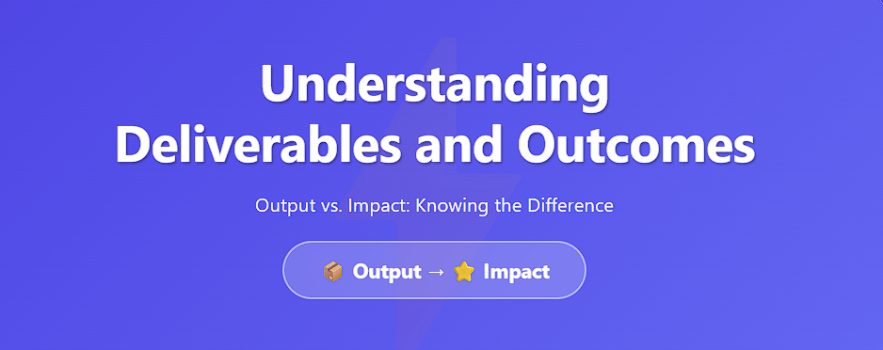
A deliverable is what the project team produces; an outcome is the result or value that deliverable creates.
Understanding the distinction helps teams focus not just on completing tasks, but on delivering impact.
This article explains the difference between deliverables and outcomes, why both matter, and how to measure success using each.
✅ What Are Deliverables?
Deliverables are tangible or measurable outputs produced during a project.
They can be documents, software modules, reports, prototypes, or any product handed over to the client or sponsor.
Examples include:
✔️ A completed website
✔️ A project plan or design document
✔️ A training manual
✔️ A final report
Deliverables are outputs that represent what the project produces.
✅ What Are Outcomes?
Outcomes represent the value or change that results from those deliverables.
They measure why the project was undertaken in the first place.
Examples include:
✔️ Increased customer satisfaction
✔️ Reduced operational costs
✔️ Improved team collaboration
✔️ Higher sales conversion rates
Outcomes reflect impact, not output.
✅ Main Differences Between Deliverables and Outcomes
A comparison illustrating how outputs differ from results in project performance.
| Aspect | Deliverables | Outcomes |
|---|---|---|
| Definition | Tangible outputs produced by the project. | The benefits or changes resulting from those outputs. |
| Focus | What the team produces. | Why the project matters to stakeholders. |
| Measurement | Measured by completion or quality standards. | Measured by business value or performance improvement. |
| Responsibility | Project team ensures completion. | Sponsor or client evaluates impact. |
| Example | A new CRM system implemented. | Customer retention increases by 15% after rollout. |
✅ How Deliverables and Outcomes Work Together
Deliverables and outcomes are interdependent:
- Deliverables are the means; outcomes are the ends.
- High-quality deliverables enable successful outcomes, but outcomes depend on adoption and user impact.
A project can deliver everything on time and still fail — if the outcomes don’t produce value.
That’s why effective project managers measure both delivery success and business success.
✅ Tips for Managing Both
☑️ 1. Define Deliverables Early
Document each deliverable clearly in the project charter or scope statement with measurable acceptance criteria.
☑️ 2. Link Deliverables to Business Objectives
Every deliverable should directly support one or more intended outcomes.
☑️ 3. Use KPIs to Measure Outcomes
Track metrics such as ROI, efficiency improvement, or user satisfaction to validate success.
☑️ 4. Communicate the Difference to Stakeholders
Ensure everyone understands that finishing a deliverable isn’t the same as achieving the desired impact.
✅ Common Mistakes to Avoid
❌ Treating deliverables as the ultimate goal instead of a means to an outcome.
❌ Failing to measure post-implementation results.
❌ Overlooking stakeholder adoption when evaluating success.
❌ Assuming technical completion equals business value.
✅ Final Thoughts
Understanding the difference between deliverables and outcomes transforms how you plan, execute, and evaluate projects.
Deliverables show what you built — outcomes show why it mattered.
Both are essential for sustainable success and stakeholder satisfaction.
Great project managers don’t stop at delivery — they ensure real, measurable outcomes.