 MElkhateeb
➡️ Introduction
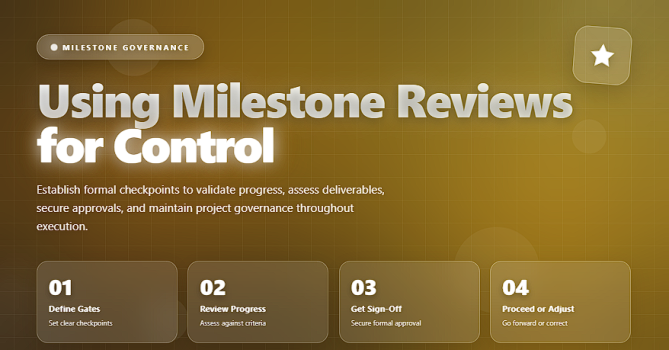
Milestones are more than dates on a timeline — they are decision points in a project’s lifecycle. A milestone review allows project managers and stakeholders to evaluate progress, confirm deliverable quality, validate assumptions, and determine whether the project is still on track or requires corrective action.
Top 5 Project Management Software
Unlike regular status meetings, milestone reviews provide a strategic checkpoint where teams pause, reflect, measure performance, and decide how to move forward. Strong milestone reviews improve alignment, reduce risk, and strengthen governance across the entire project.
This article explains what milestone reviews are, why they matter, and how to conduct them effectively to improve project control and predictability.
✅ What Are Milestone Reviews?
Milestone reviews (also called phase gate reviews or stage reviews) are formal meetings conducted at key points in a project to evaluate:
✔️ overall progress
✔️ completed deliverables
✔️ budget and schedule performance
✔️ unresolved issues and risks
✔️ readiness to move to the next phase
A milestone review is NOT about daily tasks. It’s about confirming whether the project is healthy, feasible, and aligned with expectations.
✅ Why Milestone Reviews Matter
Milestone reviews help project managers:
✔️ detect risks early
✔️ ensure deliverables meet quality standards
✔️ confirm resource readiness for the next phase
✔️ validate schedule and budget performance
✔️ maintain alignment with sponsors and stakeholders
✔️ enforce accountability
They act as control points that prevent the project from drifting off course.
✅ When to Conduct Milestone Reviews
Milestone reviews typically occur at:
✔️ end of project phases (initiation → planning → execution → closure)
✔️ completion of major deliverables
✔️ key approval points
✔️ transitions between vendors or teams
✔️ decision points requiring sponsor approval
Projects using Waterfall, Hybrid, or governance-heavy environments rely heavily on milestone reviews.
✅ What to Include in a Milestone Review
✔️ 1. Review of Completed Deliverables
Confirm deliverables meet:
- quality standards
- scope requirements
- acceptance criteria
- compliance standards
✔️ 2. Schedule Performance
Check:
- planned vs actual milestone dates
- upcoming deadlines
- any slippage requiring re-forecasting
✔️ 3. Budget Performance
Assess:
- actual vs planned spending
- cost variances
- remaining budget health
✔️ 4. Risks and Issues
Update:
- status of existing risks
- new risks emerging
- issues requiring escalation
- mitigation and corrective actions
✔️ 5. Resource Assessment
Evaluate resource readiness:
- team capacity
- skills availability
- vendor performance
- changes in workload
✔️ 6. Stakeholder Alignment
Ensure expectations match reality:
- feedback from sponsors
- concerns from governance board
- communication gaps
✅ How to Conduct an Effective Milestone Review
✔️ Step 1: Prepare a Clear Review Agenda
Include:
- objectives of the review
- deliverables to be assessed
- documents to be reviewed
- expected decisions
✔️ Step 2: Gather Evidence and Documentation
Prepare:
- status reports
- budget summaries
- risk register updates
- quality review results
- deliverable samples or demos
✔️ Step 3: Facilitate the Review Meeting
During the meeting:
- present progress
- review deliverables
- highlight deviations
- discuss corrective actions
- confirm readiness to move forward
✔️ Step 4: Document Decisions and Outcomes
Record:
- approvals
- rejections
- required changes
- updated forecasts
- action items with owners
✔️ Step 5: Communicate the Results
Share a summary with:
- the project team
- sponsor
- governance board
- major stakeholders
Transparency ensures alignment.
❌ Common Mistakes to Avoid
❌ Treating milestone reviews like ordinary status meetings
❌ Focusing on activities instead of outcomes
❌ Not involving the right decision-makers
❌ Moving forward without addressing outstanding issues
❌ Poor documentation
⭐ Best Practices
✔️ Keep reviews focused on outcomes, not micro-tasks
✔️ Use visuals (dashboards, charts, roadmaps)
✔️ Assign clear owners to action items
✔️ Reconfirm assumptions at each review
✔️ Use milestone reviews as quality checkpoints
⭐ Final Thoughts
Milestone reviews are one of the most powerful control mechanisms in project management. They give leaders a structured moment to evaluate progress, confirm direction, and reinforce accountability.
By conducting milestone reviews with discipline, a project manager strengthens governance, improves predictability, and ensures that the project delivers value — not just activity.
Great projects don’t “slide” into success —
they achieve it through intentional checkpoints and informed decisions.