 MElkhateeb
➡️ Introduction
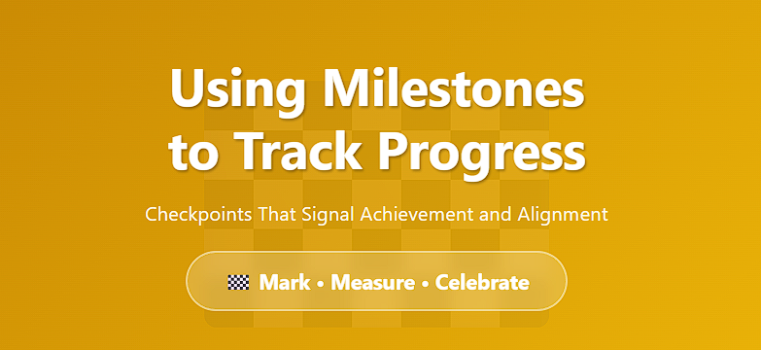
In project management, milestones act as checkpoints that measure progress, signal major achievements, and ensure alignment with the project plan.
Top 5 Project Management Software
Unlike regular tasks, milestones don’t represent work to be done — they mark key events or decision points that show whether the project is moving in the right direction.
When used effectively, milestones give teams and stakeholders clarity, confidence, and control over the project’s progress.
This guide explains what milestones are, why they matter, and how to use them to track performance — including a responsive table ready for any device.
✅ What Are Project Milestones?
A milestone is a specific point in the project timeline that indicates the completion of a major deliverable or phase.
Milestones help project managers:
✔️ Monitor progress against the baseline.
✔️ Communicate key achievements to stakeholders.
✔️ Identify schedule variances early.
✔️ Maintain accountability across teams.
Examples include:
- Project kickoff approval
- Completion of design phase
- First prototype delivery
- Final client review
✅ Characteristics of Effective Milestones
Key traits that make milestones useful for tracking and decision-making.
| Characteristic | Description | Example |
|---|---|---|
| Specific | Each milestone marks a clearly defined achievement or deliverable. | “Design phase approved” rather than “Design phase ongoing.” |
| Measurable | Progress can be objectively verified by deliverable completion or approval. | Prototype reviewed and signed off by client. |
| Time-Bound | Each milestone has a clear target date to monitor progress effectively. | Testing phase to complete by August 15. |
| Linked to Deliverables | Milestones should directly relate to project outputs or major phases. | Final marketing campaign launch deliverable approved. |
| Decision-Oriented | Milestones often represent points where go/no-go decisions are made. | Stakeholder approval to move from design to development phase. |
✅ How to Use Milestones Effectively
☑️ 1. Define Milestones Early
Identify milestones during project planning and link them to major deliverables or phases.
☑️ 2. Place Them Strategically
Distribute milestones evenly across the project timeline to maintain consistent tracking points.
☑️ 3. Align With Stakeholder Reviews
Use milestones as checkpoints for formal approvals or performance reviews.
☑️ 4. Integrate Into the Schedule
Include milestones in your Gantt chart or project scheduling tool — assign zero duration to represent events, not work.
☑️ 5. Monitor and Communicate
Use milestone completion status to provide quick, visual updates to sponsors and clients.
✅ Benefits of Using Milestones
✔️ Makes progress measurable and visible.
✔️ Keeps the team focused on major objectives.
✔️ Facilitates early detection of schedule slippage.
✔️ Simplifies reporting for executives and stakeholders.
✔️ Encourages accountability and motivation.
✅ Common Mistakes to Avoid
❌ Setting too many milestones (causing clutter instead of clarity).
❌ Using milestones for minor activities.
❌ Forgetting to update milestone completion dates when the schedule shifts.
❌ Treating milestone completion as optional rather than mandatory.
✅ Tools for Managing Milestones
✔️ Microsoft Project – Automatically track milestone dates in the timeline view.
✔️ Monday.com – Add milestones within tasks and use color-coded indicators.
✔️ Miro – Create visual milestone roadmaps with collaborative updates.
✔️ ClickUp – Assign milestone dependencies to track completion status easily.
✅ Final Thoughts
Milestones are small but powerful tools for controlling and communicating progress.
They transform your project schedule from a simple list of tasks into a strategic roadmap that tracks achievement and accountability.
A milestone isn’t just a date — it’s proof that your project is moving forward.