 MElkhateeb
➡️ Introduction
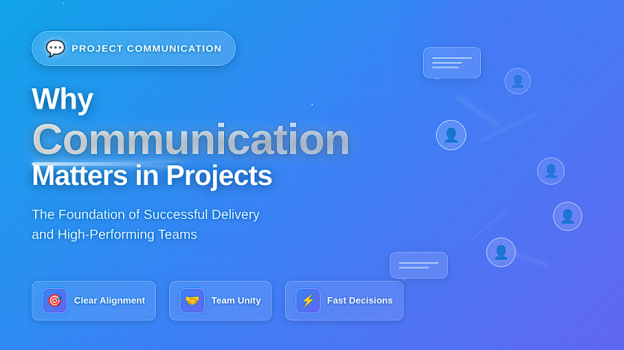
Communication is the lifeblood of every project. It connects people, aligns goals, and turns strategy into coordinated action. Without effective communication, even the best plans collapse under misunderstanding, confusion, and mistrust.
Top 5 Project Management Software
For project managers, communication isn’t just about exchanging information — it’s about ensuring shared understanding, clarity, and collaboration.
When done right, communication accelerates decision-making, builds stronger teams, and drives successful project outcomes.
✅ The Role of Communication in Project Success
Project communication ensures that everyone — from team members to stakeholders — knows what’s happening, why it matters, and what comes next.
✔️ Keeps objectives and expectations aligned.
✔️ Builds trust and transparency among stakeholders.
✔️ Prevents costly misunderstandings and delays.
✔️ Enhances collaboration across departments or time zones.
✔️ Provides early warnings for risks and issues.
Effective communication transforms chaos into coordination and information into insight.
✅ Common Communication Channels in Projects
✔️ Formal Reports – Progress updates, risk summaries, and meeting minutes.
✔️ Meetings – Status reviews, decision sessions, and stakeholder briefings.
✔️ Digital Tools – Project management software (like Monday.com or Miro) for real-time collaboration.
✔️ Instant Messaging – Slack, Teams, or email for quick updates.
✔️ Dashboards & Portals – For visual performance tracking and shared access.
✅ Elements of Effective Project Communication
✅ Core Elements of Effective Project Communication
Essential components that ensure clarity, alignment, and engagement across all stakeholders.
| Element | Description | Best Practice |
|---|---|---|
| 1. Clarity | Messages must be clear, concise, and tailored to the audience. | Avoid jargon and use visuals to explain complex information. |
| 2. Consistency | Information should be communicated regularly and predictably. | Use a structured communication plan with scheduled updates. |
| 3. Transparency | Share both successes and challenges openly to build trust. | Include progress, risks, and mitigation updates in reports. |
| 4. Feedback Loops | Enable two-way communication to capture team insights and concerns. | Hold retrospectives or open Q&A sessions regularly. |
| 5. Accessibility | Ensure information is easy to access and understand for all team members. | Centralize updates in shared tools like Monday.com or Miro. |
✅ Tools That Improve Project Communication
✔️ Monday.com – Centralized collaboration hub for updates and dashboards.
✔️ Miro – Visual brainstorming and planning for distributed teams.
✔️ Microsoft Teams or Slack – Real-time messaging and document sharing.
✔️ Smartsheet – Streamlined project documentation and progress tracking.
✔️ Power BI – Visual storytelling for data-driven project reporting.
✅ Common Communication Pitfalls
❌ Assuming understanding instead of confirming it.
❌ Sending too much information without structure.
❌ Ignoring stakeholder preferences or information needs.
❌ Delayed communication about risks or issues.
❌ Failing to document critical decisions or approvals.
✅ Best Practices
✔️ Create a Communication Management Plan early in the project.
✔️ Match the message to the audience — technical, executive, or client.
✔️ Keep communication visual and structured.
✔️ Encourage active listening in meetings.
✔️ Document and store key conversations for accountability.
✅ Final Thoughts
Strong communication is the foundation of project excellence.
When teams communicate clearly and consistently, they build trust, reduce waste, and create alignment that drives results.
Projects fail in silence — but they succeed through conversation.